Look, I've spent the last fifteen years breathing concrete dust and arguing with engineers on job sites. I’ve seen hoses fail when you really need them, causing delays, costing money, and frankly, putting people at risk. That’s why understanding a good 1 4 high pressure hose isn’t just about specs and PSI – it’s about reliability, safety, and keeping a project on schedule. This isn’t some lab experiment; this is real-world stuff.
We're talking about situations where downtime isn’t an option. Think hydraulic fracturing, heavy-duty cleaning, or even emergency response. A failure in a 1 4 high pressure hose can shut down operations, potentially leading to significant financial losses and, more importantly, compromising safety. Knowing your hose, its limitations, and how to inspect it is paramount. It's a lesson I’ve learned the hard way, watching projects grind to a halt over a burst hose.
This isn’t just about buying a piece of rubber; it’s about investing in peace of mind. A quality 1 4 high pressure hose means fewer headaches, less risk, and ultimately, a more efficient and safer work environment. And believe me, a happy crew is a productive crew. We'll break down what makes these hoses tick, what you need to look for, and why it matters out on the job.
The Importance of 1 4 High Pressure Hose
Honestly, it all boils down to safety and productivity. A 1 4 high pressure hose is a critical component in a lot of applications, and when it fails, things get real, real fast. We’re not talking about a leaky faucet here; we're talking about potentially dangerous situations. The right hose prevents costly downtime, protects your crew, and ensures your project stays on track. I've seen entire projects delayed because someone skimped on the hose.
From hydraulic equipment to pressure washing, a reliable 1 4 high pressure hose is the backbone of many operations. Knowing the specific requirements of your application and selecting the appropriate hose is crucial. It's not a one-size-fits-all situation, and trying to make do with something inadequate will almost always backfire. That's where experience comes in, and knowing what to look for is half the battle.
Understanding 1 4 High Pressure Hose: A Practical Definition
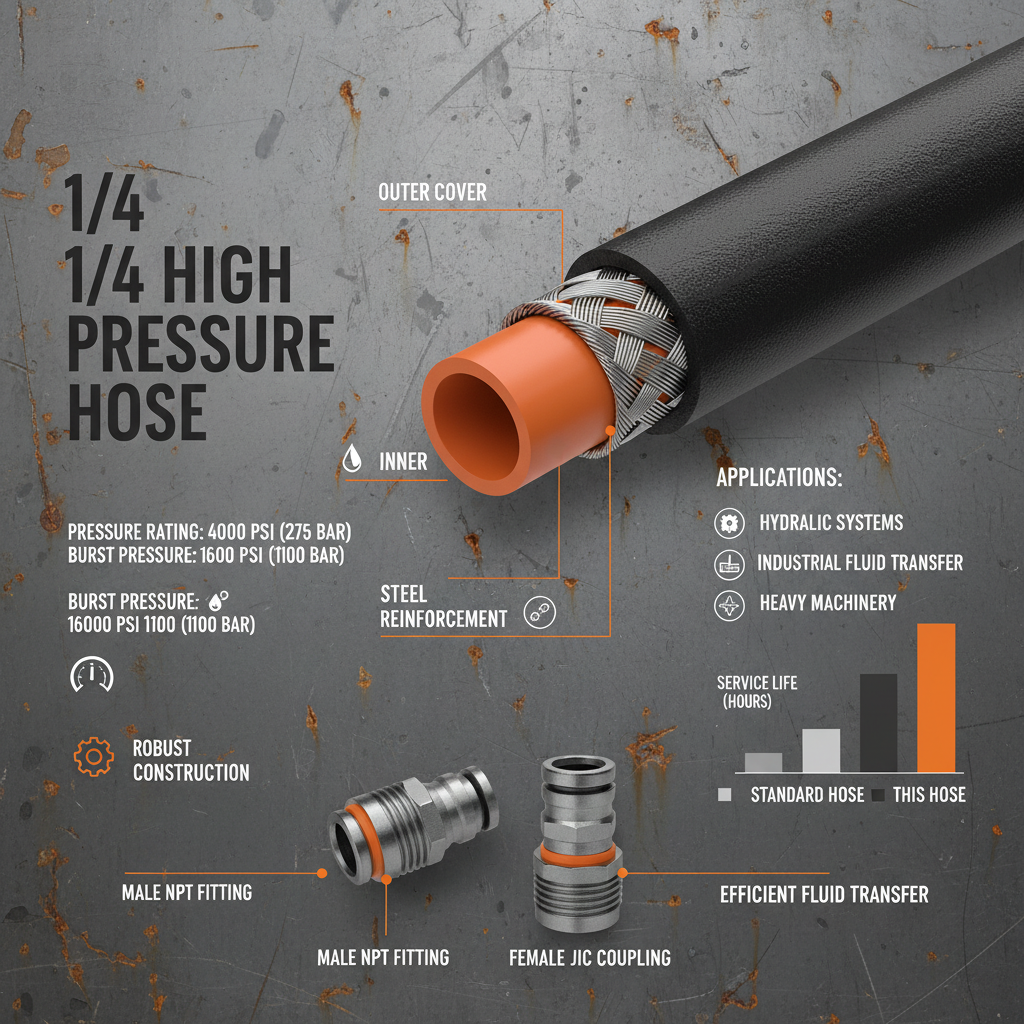
Alright, let’s keep it simple. A 1 4 high pressure hose is designed to safely convey fluids – often hydraulic oil, water, or chemicals – at high pressures. That “1 4” refers to the inner diameter in inches, which dictates the flow rate. It’s built with multiple layers: an inner tube to resist the fluid, reinforcement layers for strength, and an outer cover for protection. It’s not just a tube; it’s an engineered system.
This kind of hose is vital in industries where power and precision are key. Think construction, manufacturing, agriculture – anywhere you’ve got machinery relying on hydraulic systems. It’s a direct link between the power source and the work being done, and its integrity is non-negotiable. A reliable 1 4 high pressure hose is essential for maintaining efficiency and preventing accidents.
It connects directly to modern demands, not just in industrial settings but also in emergency services. Firefighters rely on high-pressure hoses, as do rescue teams using hydraulic tools. It’s a technology that’s constantly evolving to meet the needs of a changing world. It’s not glamorous, but it's fundamental.
Key Factors Influencing 1 4 High Pressure Hose Performance
Durability is the first thing I look at. This isn’t about how pretty the hose looks; it’s about how it holds up to abrasion, kinking, and exposure to the elements. Reinforcement materials – steel wire, synthetic fibers – play a huge role here. You get what you pay for; cheaper hoses often cut corners on these critical components. I’ve had to replace hoses that weren't up to the task, and it’s a pain.
Pressure rating is obviously crucial. You need to know the maximum pressure the hose can handle and ensure it exceeds the demands of your application. Don't even think about pushing it to the limit. It's a recipe for disaster. Also, temperature plays a big part. Extreme heat or cold can significantly affect a hose's performance and lifespan.
The outer cover material is often overlooked, but it’s a key protector. It needs to be resistant to oil, chemicals, and UV exposure. A cracked or degraded cover is a sign that the hose is nearing the end of its life. And finally, proper fittings are essential. A mismatched or poorly installed fitting can be a weak point and lead to leaks or failures.
Real-World Applications of 1 4 High Pressure Hose
Let’s talk applications. I see these hoses everywhere. In construction, they're powering hydraulic excavators, loaders, and cranes. In agriculture, they're used in irrigation systems and pesticide sprayers. In manufacturing, they're integral to hydraulic presses and injection molding machines. It’s a workhorse in countless industries.
Emergency services are a big one. Fire departments rely heavily on high-pressure hoses for firefighting, and rescue teams use hydraulic tools powered by these hoses to extricate people from vehicles or collapsed structures. The reliability of the hose can literally be a matter of life and death.
1 4 High Pressure Hose Application Ratings
Advantages & Long-Term Value Proposition
Investing in quality 1 4 high pressure hose isn’t just about avoiding immediate failures. It’s about reducing long-term costs. Fewer replacements mean less downtime, less labor, and less money spent on parts. A robust hose simply lasts longer, providing a better return on investment.
Beyond cost, there’s the safety factor. A reliable hose minimizes the risk of accidents and injuries, protecting your workforce and your reputation. And frankly, that peace of mind is priceless. You don’t want to be explaining a preventable incident to a client or, worse, to a family.
Global Applications and Use Cases
The demand for durable and reliable 1 4 high pressure hose is global. From large-scale infrastructure projects in Asia to oil and gas operations in the Middle East, these hoses are essential components. In post-disaster relief operations, they are used for debris removal and water delivery. It’s a ubiquitous piece of equipment.
Even in remote industrial zones, where access to parts and service is limited, the reliability of the hose is paramount. Companies operating in these areas need hoses that can withstand harsh conditions and require minimal maintenance. That's where robust construction and high-quality materials really pay off.
Developing countries are seeing increased use of these hoses as infrastructure improves and industrialization grows. This is creating a growing market for reliable and affordable hose solutions.
Future Trends & Innovations in High-Pressure Hose Technology
We’re seeing a move towards lighter-weight, more flexible hoses that are easier to handle and maneuver. New materials, like thermoplastic composites, are offering improved strength and durability. Digital sensors are even being integrated into hoses to monitor pressure, temperature, and wear, providing real-time data for predictive maintenance.
There’s also a growing focus on sustainability. Manufacturers are exploring the use of recycled materials and developing more environmentally friendly production processes. Reducing the environmental impact of these hoses is becoming increasingly important.
Automation is also playing a role. Automated hose crimping and assembly systems are improving efficiency and reducing the risk of errors. As technology advances, we can expect to see even more innovative solutions in the high-pressure hose market.
Summary of Factors Influencing 1 4 High Pressure Hose Selection
| Application Type |
Pressure Requirement |
Environmental Conditions |
Material Composition |
| Hydraulic Excavation |
3000-5000 PSI |
Dusty, Outdoor |
Steel Wire Reinforced Rubber |
| Pressure Washing |
1500-3000 PSI |
Wet, Chemical Exposure |
Synthetic Rubber with Chemical Resistance |
| Agricultural Spraying |
800-1500 PSI |
UV Exposure, Chemical Contact |
EPDM Rubber |
| Firefighting |
Up to 6000 PSI |
Extreme Heat, Water Exposure |
Aramid Fiber Reinforced Rubber |
| Hydraulic Testing |
5000-10000 PSI |
Controlled Lab Environment |
High-Tensile Steel Wire |
| Emergency Rescue Tools |
3000-6000 PSI |
Varied, Harsh Conditions |
Hybrid Polymer and Steel Construction |
FAQS
Always choose a hose with a PSI rating that exceeds the maximum pressure of your system. It's a good rule of thumb to add a safety factor of at least 2:1. Underestimating the pressure can lead to catastrophic failure. Don't cut corners here; it's not worth the risk. Remember, the stated working pressure is at 70°F. Elevated temperatures drastically reduce safe working pressure!
Inspect your hose before every use. Look for cracks, abrasions, kinks, or any signs of damage to the cover. Also, check the fittings for leaks or corrosion. Even a small imperfection can compromise the hose's integrity. A quick visual inspection can save you a lot of trouble down the road.
Store hoses in a cool, dry place, away from direct sunlight and extreme temperatures. Avoid kinking or bending the hose sharply. Ideally, coil the hose loosely and hang it up. Don’t store it in a pile with other equipment where it could be damaged. Proper storage extends the life of the hose significantly.
Generally, no. Repairing a high-pressure hose is not recommended. Even a seemingly minor repair can compromise the hose's structural integrity and create a potential safety hazard. It’s always best to replace a damaged hose with a new one. A failure under pressure could be devastating.
Common fitting types include crimped fittings, swaged fittings, and field-attachable fittings. Crimped fittings are the most common and reliable, requiring a specialized crimping machine. Ensure the fittings are compatible with the hose and the application. Using the wrong fittings can lead to leaks and failures.
The lifespan of a 1 4 high pressure hose varies depending on the application, operating conditions, and quality of the hose. With proper care and maintenance, a good-quality hose can last for several years. However, regular inspections are crucial. Replace the hose if you notice any signs of wear or damage. It’s better to be safe than sorry.
Conclusion
Ultimately, understanding 1 4 high pressure hose isn’t just about technical specifications. It’s about recognizing its vital role in safety, efficiency, and overall project success. Selecting the right hose, inspecting it regularly, and replacing it when necessary are all critical components of a responsible and effective operation. This isn’t a cost center; it’s an investment in reliability.
Don’t underestimate the importance of quality. A cheap hose might seem like a good deal upfront, but the potential cost of failure – in terms of downtime, safety, and reputation – far outweighs the savings. I’ve seen it happen too many times. For reliable 1 4 high pressure hose solutions, and expert advice, visit our website: 1 4 high pressure hose.

 Call Us+86-158-0331-9351
 Emailcarrie@sinopulse.cn
 AddressHandan City, Hebei , China