Navigating the complex landscape of fluid power systems requires more than just quality hardware; it demands a comprehensive technical roadmap. A professional hydraulic hose catalogue serves as this vital blueprint, allowing engineers and procurement specialists to match specific pressure requirements and environmental stressors with the correct hose architecture to prevent catastrophic system failure.
In an era of rapid industrial automation, the ability to quickly identify the correct specifications—from inner diameters and working pressures to temperature tolerances—is critical for minimizing downtime. A well-structured hydraulic hose catalogue doesn't just list products; it provides the necessary data to ensure safety, optimize flow rates, and extend the service life of hydraulic machinery across global sectors.
Whether you are managing a fleet of construction equipment or designing a bespoke industrial plant, understanding the nuances of hose construction (such as steel wire braiding vs. spiral reinforcement) is paramount. This guide explores how to leverage a hydraulic hose catalogue to enhance operational reliability and maintain strict compliance with international safety standards.
Global Relevance of the Hydraulic Hose Catalogue
From a global perspective, the reliance on hydraulic systems in infrastructure and manufacturing is absolute. According to ISO standards and industrial benchmarks, the precision of fluid transmission is what enables the massive torque required for mining, aerospace, and maritime operations. A standardized hydraulic hose catalogue acts as the universal language between manufacturers in one continent and operators in another, ensuring that a replacement hose in a remote site meets the exact burst pressure requirements of the original design.
The challenge arises when mismatched components are used due to a lack of detailed technical documentation. In high-pressure environments, even a minor discrepancy in hose grade can lead to catastrophic bursts, resulting in environmental spills or severe workplace injuries. Therefore, the global movement toward digitized, transparent catalogues is not just about sales, but about establishing a baseline for industrial safety and operational continuity worldwide.
Defining the Modern Hydraulic Hose Catalogue
At its core, a hydraulic hose catalogue is a comprehensive technical database that categorizes flexible conduits based on their ability to transport hydraulic fluids under varying pressures. Unlike a simple product list, a professional catalogue integrates material science, fluid dynamics, and mechanical engineering data to guide the user toward the optimal selection for their specific application.
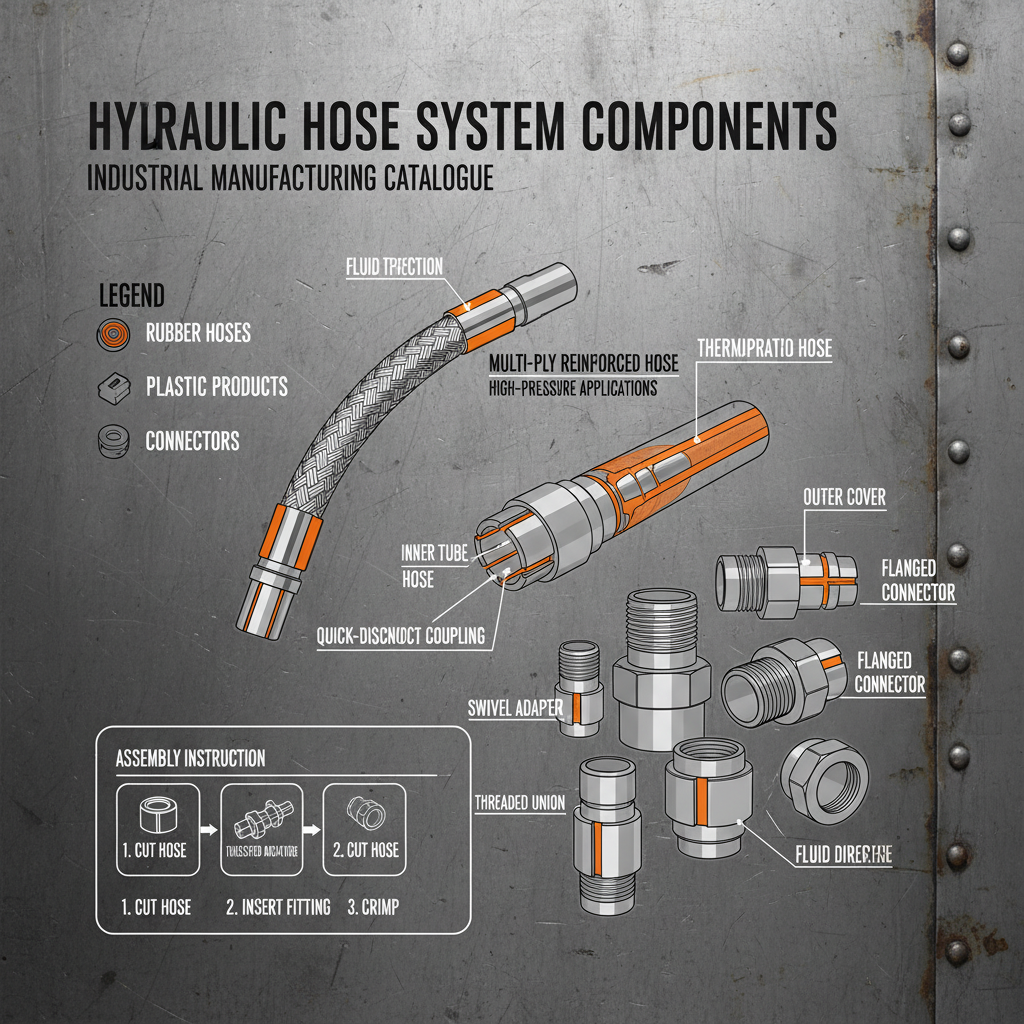
Modern catalogues now bridge the gap between traditional rubber manufacturing and smart industry needs. They detail the interplay between the inner tube (compatibility with oils or chemicals), the reinforcement layer (providing the structural strength), and the outer cover (protecting against abrasion, ozone, and weather). This layered definition is essential for humanitarian needs in disaster relief, where hydraulic cutting tools must operate reliably in extreme weather.
Ultimately, the catalogue serves as a risk management tool. By providing clear "Safety Factors" (typically a 4:1 burst-to-working pressure ratio), it empowers technicians to make informed decisions that balance cost-efficiency with an uncompromising commitment to safety and system longevity.
Core Components of High-Performance Hoses
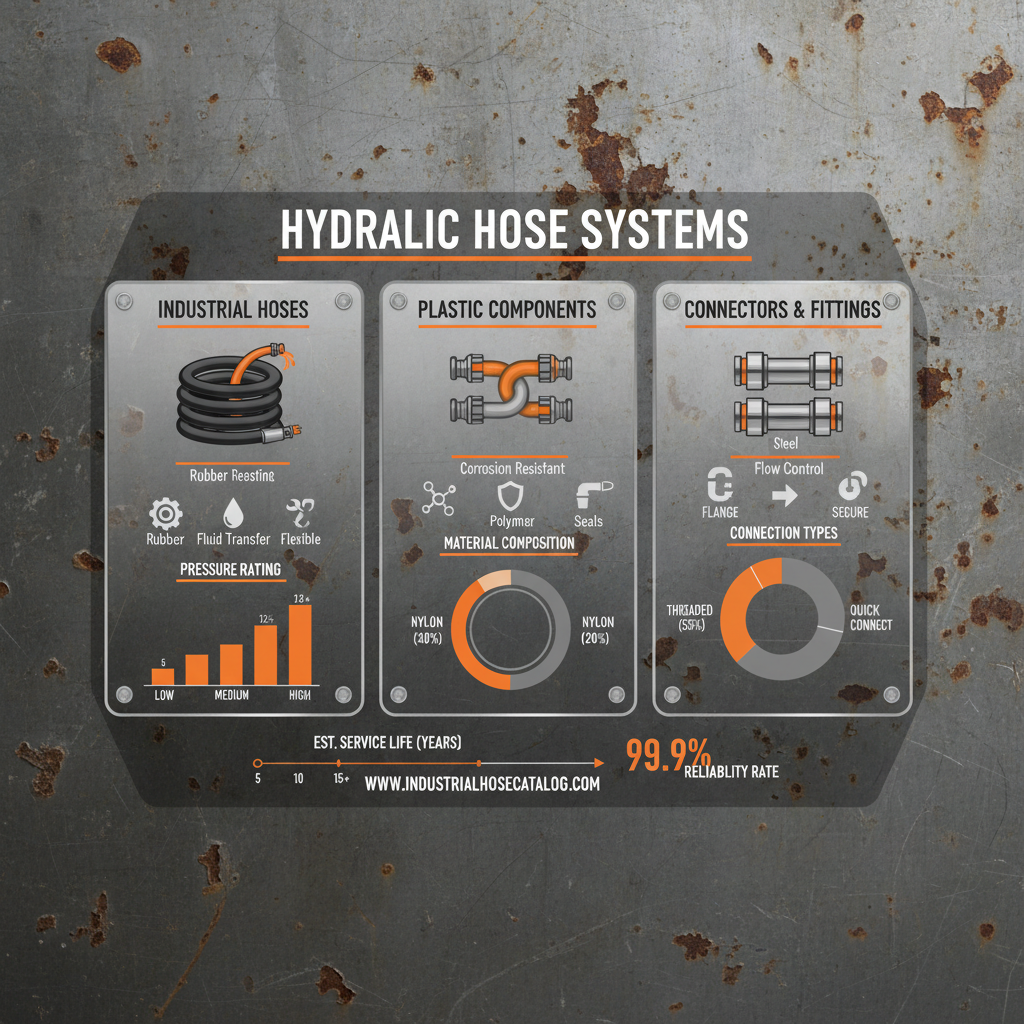
When browsing a hydraulic hose catalogue, the first critical factor is Pressure Rating and Reinforcement. High-pressure systems require steel wire braiding or spiral reinforcement to prevent the hose from expanding or bursting. The number of wire layers directly correlates to the working pressure, making this a non-negotiable metric for heavy-duty machinery.
Another vital component is Material Compatibility and Durability. The inner tube must be chemically compatible with the hydraulic fluid to avoid degradation. For example, a hydraulic hose catalogue will distinguish between standard nitrile rubber for petroleum oils and specialized PTFE for aggressive chemical environments or extreme temperatures.
Finally, Flexibility and Bend Radius are key to installation success. A hose that is too rigid can suffer from premature fatigue and cracking at the bend points. Professional catalogues provide a minimum bend radius for every diameter, ensuring that the hose can be routed through tight engine compartments without compromising its structural integrity.
Practical Applications Across Industrial Sectors
The versatility of products found in a hydraulic hose catalogue allows them to be deployed in diverse environments. In the agricultural sector, high-pressure hoses power the lifts and steering of tractors, while in the mining industry, steel wire spiral hoses are used to move massive amounts of earth in conditions where abrasion is constant and failure is not an option.
In remote industrial zones or post-disaster relief operations, the ability to quickly identify a compatible hose from a catalogue can be the difference between a functioning rescue tool and a dead piece of equipment. Whether it's a Brake Hose for automotive safety or a Chemical Hose for industrial processing, the systematic categorization of the catalogue ensures the right tool for the right job.
Comparative Performance of Hose Types in Hydraulic Hose Catalogue
Long-Term Value and Reliability Gains
Investing time in analyzing a hydraulic hose catalogue yields tangible economic benefits. By selecting a hose with the correct specifications for the environment—such as adding an abrasion-resistant cover for construction site use—companies can significantly extend the mean time between failures (MTBF). This reduces the cost of emergency replacements and prevents the expensive downtime associated with unplanned system shutdowns.
Beyond the financial aspect, there is a profound human value: safety and trust. When a technician can verify that a hose meets ISO or SAE standards via the catalogue, it instills confidence in the operator of the machinery. This reliability fosters a culture of safety and innovation, as engineers can push the limits of hydraulic power knowing that the conduits are rated for the load.
Future Trends in Hose Technology and Digitalization
The future of the hydraulic hose catalogue is moving toward "Smart Selection" tools. We are seeing a transition from static PDF documents to interactive, AI-driven configurators that suggest the ideal hose based on the user's fluid type, temperature, and pressure inputs. This digitalization reduces human error and streamlines the procurement process.
Sustainability is also driving innovation in materials. New bio-based elastomers and recyclable reinforcement materials are beginning to appear in technical catalogues, reflecting a global shift toward green energy and reduced environmental footprints. These "green hoses" aim to maintain the same high-pressure performance while decreasing the carbon impact of rubber production.
Furthermore, the integration of IoT sensors into hose assemblies—often detailed in advanced catalogues—allows for predictive maintenance. Instead of replacing hoses on a fixed schedule, operators can monitor real-time wear and tear, replacing components only when the data indicates a risk of failure.
Overcoming Selection Challenges in Fluid Power
One of the most common challenges in using a hydraulic hose catalogue is "over-specification," where users select a hose far beyond the required pressure rating. While this seems safe, it often results in a hose that is too rigid, leading to premature failure due to fatigue and increased installation difficulty.
Another hurdle is the confusion between different international standards (e.g., DIN vs. SAE). To overcome this, expert-led catalogues now include comprehensive cross-reference tables, allowing users to find the equivalent product regardless of the standard used by the original equipment manufacturer (OEM).
The solution lies in a holistic approach: combining the technical data from the catalogue with a professional site survey. By understanding the physical routing and the actual environmental stressors, the theoretical data in the hydraulic hose catalogue can be applied accurately to ensure maximum system efficiency.
Technical Comparison Analysis of Hydraulic Hose Selection Factors
|
Hose Type
|
Pressure Capacity
|
Flexibility Score
|
Ideal Application
|
|
Steel Wire Braided
|
Medium-High
|
7/10
|
General Industrial
|
|
Steel Wire Spiral
|
Extreme High
|
4/10
|
Mining & Heavy Plant
|
|
Textile Braided
|
Low-Medium
|
9/10
|
Return Lines
|
|
PTFE Stainless Steel
|
High
|
6/10
|
Chemical/High Temp
|
|
Thermoplastic
|
Medium
|
8/10
|
Clean-room/Medical
|
|
Suction & Discharge
|
Low
|
5/10
|
Fluid Transfer
|
FAQS
To select the correct hose, you must first identify the STAMP method: Size, Temperature, Application, Material, and Pressure. Use the catalogue to match your system's maximum working pressure with the hose's rated working pressure, ensuring the material is compatible with your hydraulic fluid and the bend radius fits your installation space.
Braided hoses use interwoven wires and are generally more flexible, making them ideal for medium-pressure applications with frequent movement. Spiral hoses use wrapped layers of wire, providing much higher pressure resistance and better impulse durability, which is critical for heavy-duty machinery, though they are less flexible.
While it seems safer, over-specifying can be counterproductive. A hose with an excessively high pressure rating is typically stiffer. This increased rigidity can lead to stress at the fittings, premature fatigue cracking, and more difficult installation, potentially shortening the hose's lifespan compared to a correctly matched option.
You should refer to the catalogue during every major system overhaul or whenever you change the fluid type. Additionally, checking the "service life" guidelines in the technical data can help you establish a preventive maintenance schedule based on the specific environmental conditions your hoses are exposed to.
Most professional catalogues specify which standards (ISO, SAE, DIN) each product meets. It is essential to verify these markings to ensure compatibility with your fittings and to meet insurance or safety regulations in your specific region or industry.
Working pressure is the maximum pressure the hose is designed to handle continuously during normal operation. Burst pressure is the pressure at which the hose actually fails. Most catalogues maintain a 4:1 safety factor, meaning the burst pressure is four times higher than the working pressure to prevent accidents during pressure spikes.
Conclusion
In summary, a hydraulic hose catalogue is far more than a product directory; it is a critical engineering tool that ensures the safety, efficiency, and longevity of fluid power systems. By meticulously matching pressure ratings, material compatibility, and flexibility to the operational environment, industries can drastically reduce downtime and mitigate the risk of catastrophic failure.
As we move toward an era of Industry 4.0, the integration of digital configurators and sustainable materials will continue to evolve how we interact with these technical resources. We encourage all system designers and maintenance managers to prioritize data-driven selection over guesswork to ensure their operations remain resilient and safe. For a comprehensive selection of high-quality fluid power solutions, visit our website: www.hydhoses.com

 Call Us+86-158-0331-9351
 Emailcarrie@sinopulse.cn
 AddressHandan City, Hebei , China