Your Trusted 24 Hours Service Provider!

-
 Call Us+86-158-0331-9351
-

-
 AddressHandan City, Hebei , China


Selecting a high-pressure fluid conveyance system often comes down to a critical trade-off between flexibility and burst resistance. For engineers in heavy machinery and industrial processing, the requirement for a hose that can navigate tight bends without sacrificing structural integrity under extreme pressure is a constant challenge. This is where the engineering of a custom braided hose becomes essential, moving beyond off-the-shelf specifications to meet the precise demands of specific hydraulic circuits.
The significance of braiding—whether using textile or steel wire—lies in its ability to constrain the inner tube, preventing expansion under load. In complex systems involving hydraulic suction hoses or chemical transfer lines, a mismatch in braiding specifications can lead to premature fatigue or catastrophic failure. Understanding the synergy between the core material and the reinforcement layer is vital for maintaining system uptime and ensuring operator safety in environments where fluid leaks are not an option.
This analysis explores the technical parameters that define high-performance braided solutions, from SAE and DIN standards to the practicalities of custom assemblies. By examining the relationship between working pressure, bend radius, and material compatibility, we provide a framework for optimizing fluid power systems. For those seeking precision-engineered components, custom braided hose solutions offer the necessary balance of durability and adaptability for the most demanding industrial applications.


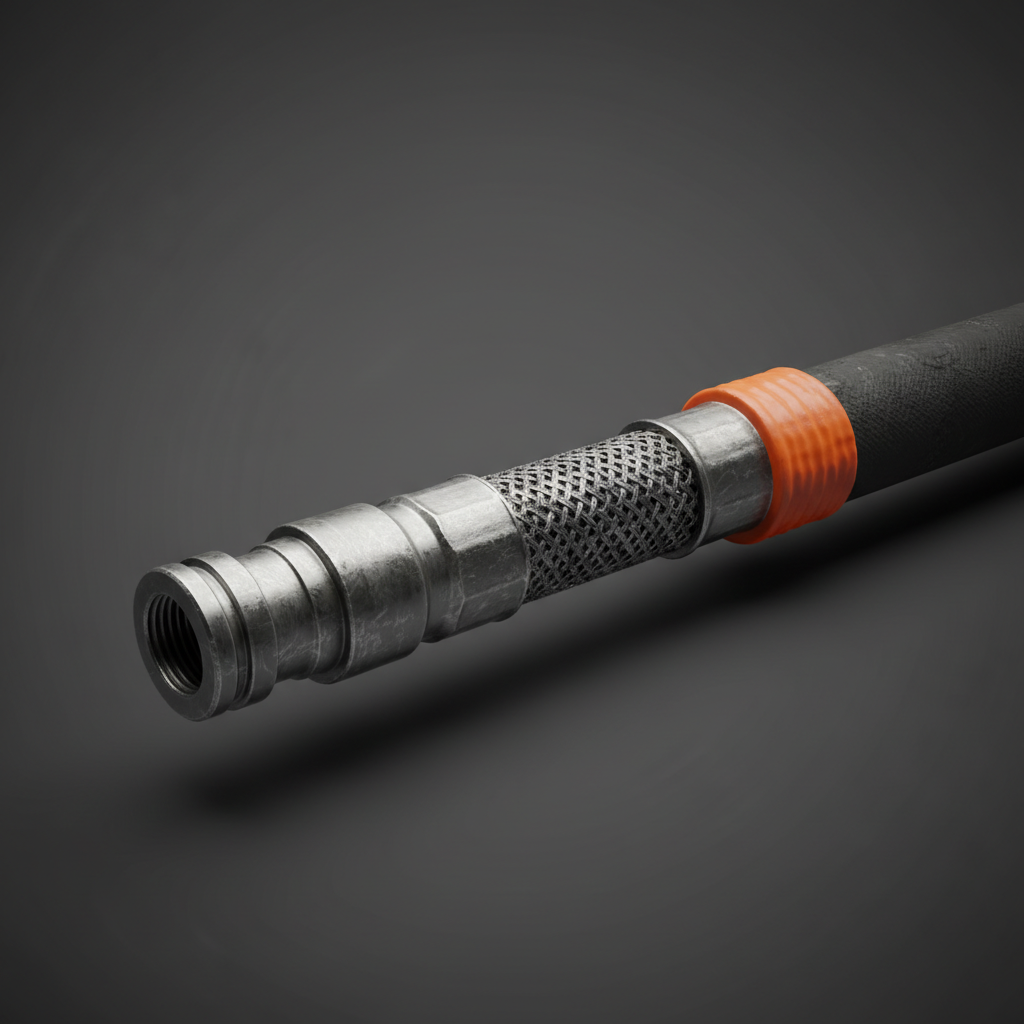
Braiding is a mechanical process where two or more wires or yarns are interlaced in a crisscross pattern. In the context of hydraulic and industrial hoses, this structure acts as a skeletal reinforcement for the inner tube. When internal pressure increases, the braided layer resists the radial expansion of the tube, converting the pressure into axial tension. This mechanism allows the hose to maintain its shape and prevent bursting while remaining flexible enough to be routed through tight machinery spaces.
Customization in braiding involves adjusting the angle of the braid and the material density. For instance, steel wire braiding provides the high pressure-bearing capacity required for SAE 100 R1 or R2 specifications, whereas textile braiding is often preferred for lower-pressure, highly flexible applications. The precision of this reinforcement determines the hose's ability to withstand impulse pressures—the sudden spikes in pressure that occur during valve switching or pump cycles—which is critical for preventing fatigue failure.
The lifespan of a braided hose is not solely dependent on its pressure rating but on the interaction between four key variables: chemical compatibility, temperature extremes, bend radius, and cover abrasion. A hose designed for petroleum-based hydraulic fluids may degrade rapidly if exposed to aggressive chemical solvents, regardless of how strong the steel braiding is. Similarly, the cover compound must be specifically engineered to be flame-resistant or MSHA-approved for underground mining environments to prevent external degradation.
True durability is achieved when the braiding density is matched to the expected impulse frequency. Over-specifying a hose can lead to excessive stiffness, which increases stress on the fittings and promotes premature leaking at the crimp point, while under-specifying leads to rapid wall thinning and burst risks.
Furthermore, the temperature range—often spanning from -40°C to +100°C for standard hydraulic oils—dictates the elasticity of the inner tube. When the tube becomes brittle in extreme cold, the braiding can no longer distribute the load evenly, creating localized stress points. Ensuring that the custom braiding matches the thermal expansion coefficients of both the tube and the cover is essential for maintaining a leak-free seal over thousands of operating hours.
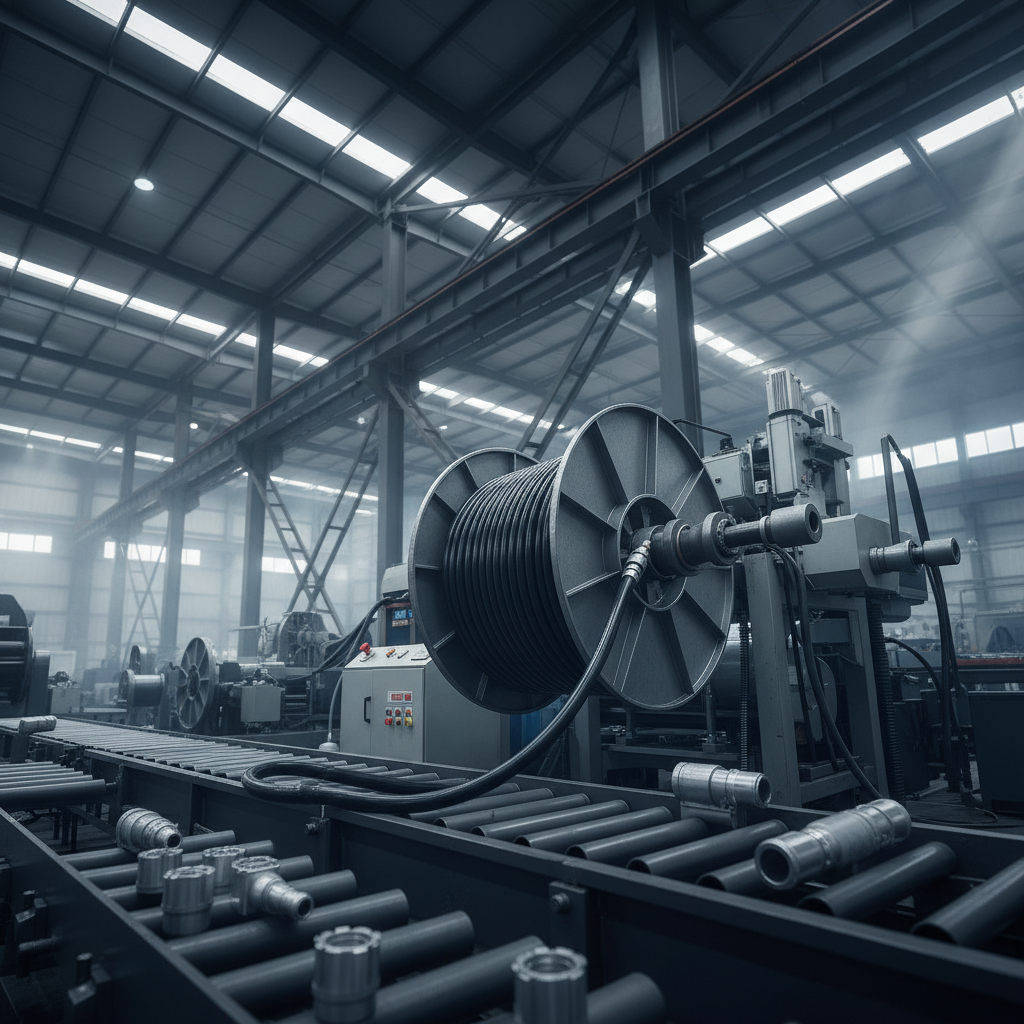
Standard hoses are sold in bulk, but custom assemblies—where the hose is cut to length and fitted with precision-crimped adapters—provide the highest operational reliability. The value of a custom assembly lies in the elimination of on-site fitting errors. By utilizing CNC-controlled crimping machines, manufacturers ensure that the fitting is compressed to the exact tolerance required to grip the braided reinforcement without crushing the inner tube.
The integration of custom lengths and specific fitting angles reduces the need for excessive bending, which significantly lowers the risk of "kinking" and maintains a constant flow rate, thereby reducing energy loss in the hydraulic system.
For specialized sectors like food grade or chemical processing, custom assemblies allow for the integration of PTFE stainless steel braided hoses. These materials offer a non-reactive internal surface combined with the high tensile strength of steel, enabling the safe transport of corrosive substances. This tailored approach transforms the hose from a simple commodity into a precision component of the overall machinery architecture.
Understanding the relationship between the inner diameter (I.D.) and the working pressure (W.P.) is fundamental for system design. As the I.D. increases, the pressure-bearing capacity of a similar braiding structure typically decreases. For example, in a 2SC hydraulic hose, a 1/4" hose may handle significantly higher pressure than a 1" hose because the wall thickness and braiding density provide a more concentrated reinforcement relative to the internal surface area.
The following data illustrates the typical working pressure trends across different hose diameters within a specific braided category. This demonstrates why selecting a custom diameter is critical; choosing a hose that is too large for the required flow may result in an insufficient pressure rating for the system's peak loads.
Braided hoses are deployed in environments where failure is catastrophic. In conveyor systems for mining or heavy construction, hoses must endure constant vibration and abrasive contact with debris. The use of FRAS-approved (Fire Resistant Anti-Static) covers is mandatory here, as it prevents the hose from igniting or creating sparks in volatile atmospheres, while the braided core handles the medium-pressure oil and water-based fluids.
In the automotive sector, specifically for brake and A/C systems, the requirements shift toward high flexibility and extreme fatigue resistance. A custom braided approach allows for a balance between the high-pressure burst requirements of a braking system and the need for the hose to move freely with the chassis. These applications rely on strict adherence to SAE standards to ensure that the hose does not expand under pressure, which would otherwise result in a "spongy" brake pedal feel.
The industry has transitioned from simple rubber tubes to complex multi-layered composites. The introduction of German technology in manufacturing has enabled higher precision in the braiding process, reducing the variance in wall thickness. This consistency is what allows hoses to meet stringent EN 853 and EN 856 standards, ensuring that a hose rated for a specific pressure will perform identically regardless of the production batch.
Modern trends are moving toward "smart" braiding and advanced thermoplastic materials. Thermoplastic hoses offer a lightweight alternative to rubber with superior chemical resistance, while new braiding techniques allow for "variable pitch" braiding—where the braid density changes along the length of the hose to provide extra strength at the ends where fittings are attached and more flexibility in the middle.
Furthermore, the integration of CNC machining for hydraulic joints has revolutionized how braided hoses are terminated. By achieving mass production of joints with micron-level precision, the industry has reduced the incidence of "blow-offs," where the hose separates from the fitting under pressure, thereby increasing the overall safety of high-pressure hydraulic circuits.
The most common cause of braided hose failure is not a burst of the tube itself, but failure at the connection point. Improper skiving or poor crimping can lead to localized stress concentrations that fatigue the braiding. Using a professional hose skiving machine ensures that the outer cover is removed precisely, allowing the fitting to grip the braiding directly without interference from the rubber cover.
Another significant risk is "twist" during installation. If a braided hose is twisted during the tightening of the fittings, the braiding angle is altered, which can reduce the working pressure by up to 25% and introduce an internal torque that promotes premature cracking. Technicians must ensure the hose is laid naturally before the final crimp or nut tightening occurs.
To mitigate these risks, a systematic approach to selection and installation is required. The table below summarizes the critical decision criteria when choosing between different braided reinforcement types based on the operational environment.
| Reinforcement Type | Primary Advantage | Typical Application | Pressure Level |
|---|---|---|---|
| Textile Braid | Extreme Flexibility | Low-pressure return lines | Low to Medium |
| Single Steel Braid | Balanced Cost/Strength | General hydraulic power | Medium to High |
| Double Steel Braid | High Burst Resistance | Heavy-duty machinery | Very High |
| Spiral Steel Wire | Maximum Durability | Mining and Excavation | Extreme High |
| PTFE + SS Braid | Chemical Inertness | Pharmaceutical/Chemical | Medium to High |
| Thermoplastic Braid | Lightweight/Clean | Industrial Automation | Medium |
Braided hoses are constructed by interlacing wires in a crisscross pattern, offering superior flexibility and a smaller bend radius, making them ideal for tight spaces. Spiral hoses, conversely, use wires wrapped in a parallel spiral, which provides significantly higher pressure resistance and better durability against impulse loads but results in a stiffer hose. The choice depends on whether your priority is routing flexibility or maximum pressure endurance.
The minimum bend radius is typically a multiple of the hose's outside diameter (O.D.), defined by standards like SAE or DIN. If a hose is bent tighter than its rated radius, the braiding can shift or "kink," restricting flow and creating a weak point prone to bursting. Always consult the manufacturer's technical data sheet for the specific braided grade to ensure the installed loop does not exceed the physical limits of the reinforcement.
It depends entirely on the inner tube material, not the braiding. While steel braiding provides strength for both, the tube must be chemically compatible. For example, a Nitrile (NBR) tube is excellent for petroleum oils but may not be suitable for all water-based hydraulic fluids. PTFE tubes are the most versatile, offering compatibility with almost all industrial fluids, and are often paired with stainless steel braiding for high-pressure chemical service.
Blow-offs occur when the hose separates from the fitting. This is usually caused by improper crimping—either under-crimping, where the grip is insufficient, or over-crimping, which crushes the braiding and weakens the structure. It can also happen if the wrong fitting is used for the hose's outer diameter. Using precision CNC crimping machinery and verified dies based on the hose's exact specifications is the only way to prevent this failure.
As temperature increases, the rubber tube softens, which can slightly reduce the effective working pressure and increase the risk of expansion. Conversely, extreme cold makes the tube brittle, increasing the stress on the braiding during bending. Most braided hoses are rated for a specific range (e.g., -40°C to +100°C); operating outside this window requires a change in material, such as switching to a specialized thermoplastic or PTFE core.
MSHA (Mine Safety and Health Administration) approval ensures that the hose cover is flame-resistant and anti-static. In mining or oil and gas environments, a standard rubber cover could ignite if exposed to a spark or build up static electricity that triggers an explosion. For these high-risk zones, a custom braided hose must have an approved cover compound to meet legal safety requirements and protect the workforce.
The effectiveness of a fluid power system relies on the precision of its weakest link, which is frequently the hose assembly. By moving from generic products to a custom braided hose strategy, operators can optimize the balance between pressure capacity, flexibility, and chemical resistance. The integration of standardized ratings (SAE/DIN) with tailored lengths and fittings ensures that the system operates at peak efficiency while minimizing the risk of downtime caused by fatigue or burst failures.
For organizations looking to upgrade their hydraulic infrastructure or develop specialized industrial piping, focusing on the synergy between material science and precision manufacturing is key. Whether the requirement is for high-pressure steel wire reinforcement or chemical-resistant PTFE braiding, professional engineering is the only way to guarantee safety and longevity. For more information on tailored hose assemblies and machinery, visit www.hydhoses.com to explore high-performance fluid conveyance solutions.