Selecting the right partner among the myriad of industrial hose manufacturers is a critical decision that directly impacts the operational safety and efficiency of any fluid-handling system. In the demanding world of manufacturing, where pressures are high and chemicals are corrosive, a hose is not merely a tube but a precision-engineered component designed to withstand extreme environmental stresses.
The global landscape of hose production has evolved rapidly, shifting from basic rubber extrusion to the integration of advanced polymers and stainless steel reinforcements. Today, leading industrial hose manufacturers must balance the competing demands of flexibility, burst pressure resistance, and chemical compatibility to serve sectors ranging from aerospace to deep-sea oil exploration.
Understanding the nuances of hose construction—from the inner tube material to the outer cover—allows procurement managers to reduce downtime and prevent catastrophic failures. By focusing on E-E-A-T (Experience, Expertise, Authoritativeness, and Trustworthiness) principles, this guide explores how to navigate the technical specifications provided by top-tier suppliers to ensure long-term reliability.
Global Relevance of Industrial Hose Manufacturers
The strategic importance of industrial hose manufacturers cannot be overstated in the context of global supply chains. According to ISO standards for fluid power and conveyor systems, the reliability of a hose assembly is often the single point of failure in heavy machinery. From the massive hydraulic systems used in mining to the precision-grade hoses in pharmaceutical labs, these manufacturers provide the "arteries" of modern industry.
Furthermore, as global trade expands, the need for standardized, high-pressure conduits that can withstand diverse climates—from the Arctic to the Sahara—has surged. Manufacturers are now tasked with creating products that not only meet local safety regulations but also comply with international quality benchmarks, ensuring that a brake hose or a chemical transfer line performs identically regardless of where it was installed.
Defining Modern Industrial Hose Production
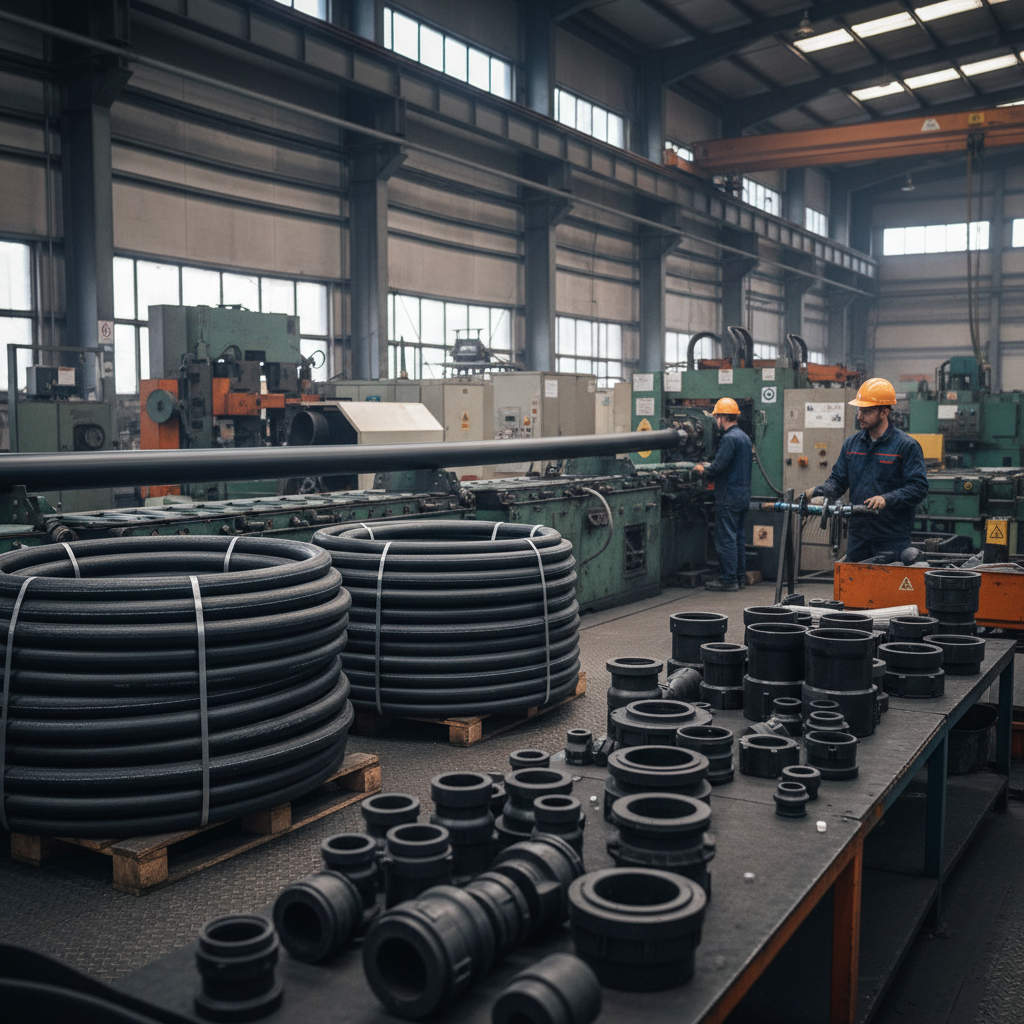
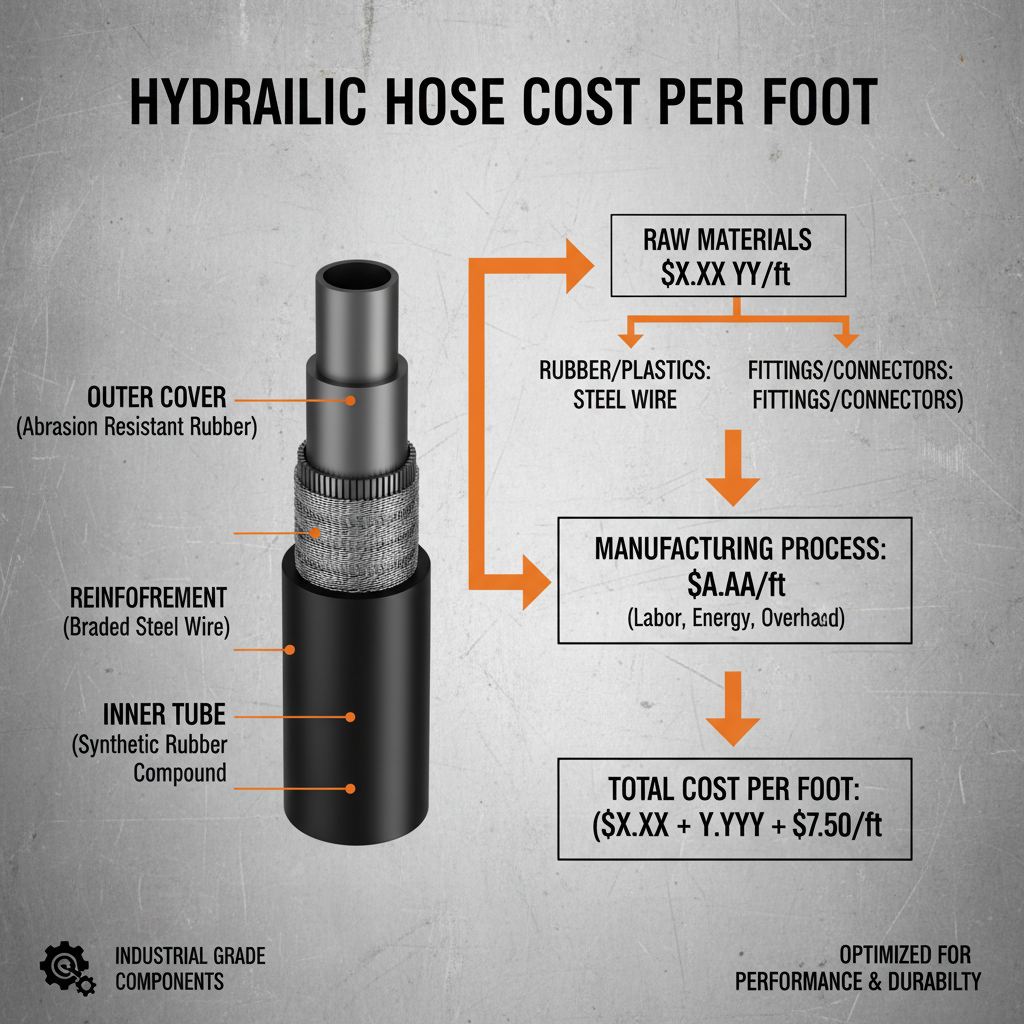
At its core, industrial hose manufacturers are specialized engineering firms that design and fabricate flexible conduits used to transport liquids, gases, or granules. Unlike simple consumer tubing, industrial hoses are multi-layered composite structures. They typically consist of a core tube for fluid compatibility, a reinforcement layer for pressure resistance (such as steel braiding or textile spirals), and a protective cover to guard against abrasion and UV degradation.
This production process is deeply intertwined with the needs of humanitarian and infrastructure projects. For instance, the deployment of large-diameter suction and discharge hoses is vital for flood control and water purification in disaster-stricken areas. The ability of manufacturers to quickly pivot production to create food-grade hoses or chemical-resistant lines often determines the speed at which essential resources can be delivered to vulnerable populations.
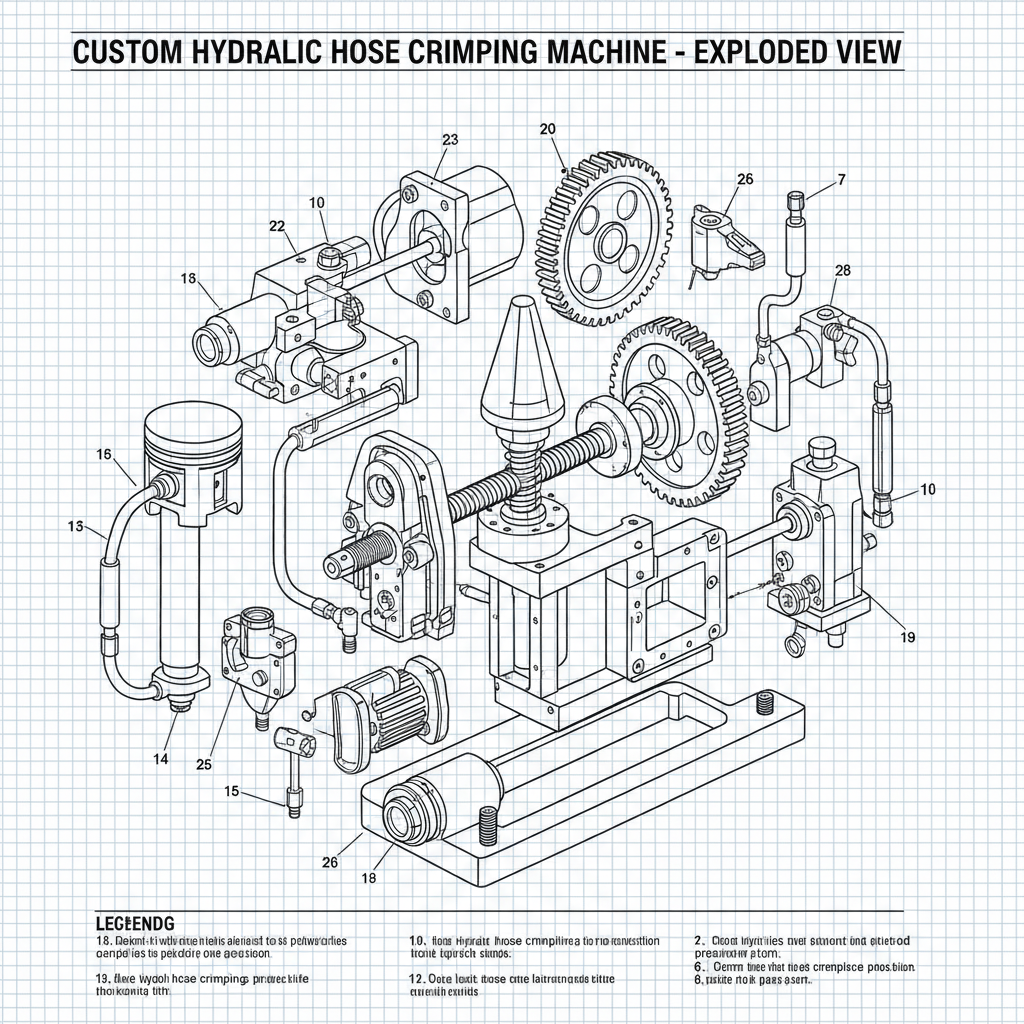
In the modern era, the definition has expanded to include "total solution providers." This means manufacturers no longer just sell the hose; they provide the Hose Crimping Machines, Hose Cutting Machines, and Testing Benches required to ensure the assembly is safe. This holistic approach ensures that the end-user isn't just buying a product, but a certified system of fluid transfer.
Core Components of High-Performance Hoses
The primary focus for any reputable industrial hose manufacturers is material compatibility. The inner liner must be chemically inert to the medium it carries; for example, PTFE is used for highly corrosive chemicals, while Nitrile is preferred for oil and fuel. If the material is mismatched, the hose will suffer from premature permeation or blistering, leading to unexpected failures.
Reinforcement is the second pillar of hose design. Whether it is a Steel Wire Braided Hydraulic hose for high-pressure spikes or a Textile Braided hose for medium-pressure flexibility, the reinforcement layer prevents the hose from expanding or bursting. Leading industrial hose manufacturers utilize precision winding technology to ensure that the reinforcement is uniform, preventing "kinking" during installation.
Finally, the external cover provides the necessary durability for harsh environments. For hoses used in mining or construction, a high-abrasion-resistant rubber cover is essential. In food and beverage applications, the cover must be non-toxic and easy to clean. The synergy between these three layers determines the hose's service life and overall safety rating in the field.
Key Factors for Selecting Manufacturers
When auditing potential partners, procurement teams should look beyond the price per foot and evaluate the manufacturer's quality control ecosystem. A top-tier supplier will provide comprehensive data sheets including the working pressure, maximum burst pressure, and temperature ranges. The presence of an in-house Hose Testing Bench is a non-negotiable requirement for any manufacturer claiming to produce safety-critical components like Brake Hoses or Steam Hoses.
Additionally, the ability to provide customized solutions—such as specific lengths, custom couplings, or specialized PTFE Stainless Steel Braided Hoses—distinguishes a true manufacturer from a mere distributor. Scalability in production and a transparent lead-time policy are essential for maintaining Just-in-Time (JIT) inventory levels in large-scale manufacturing plants.
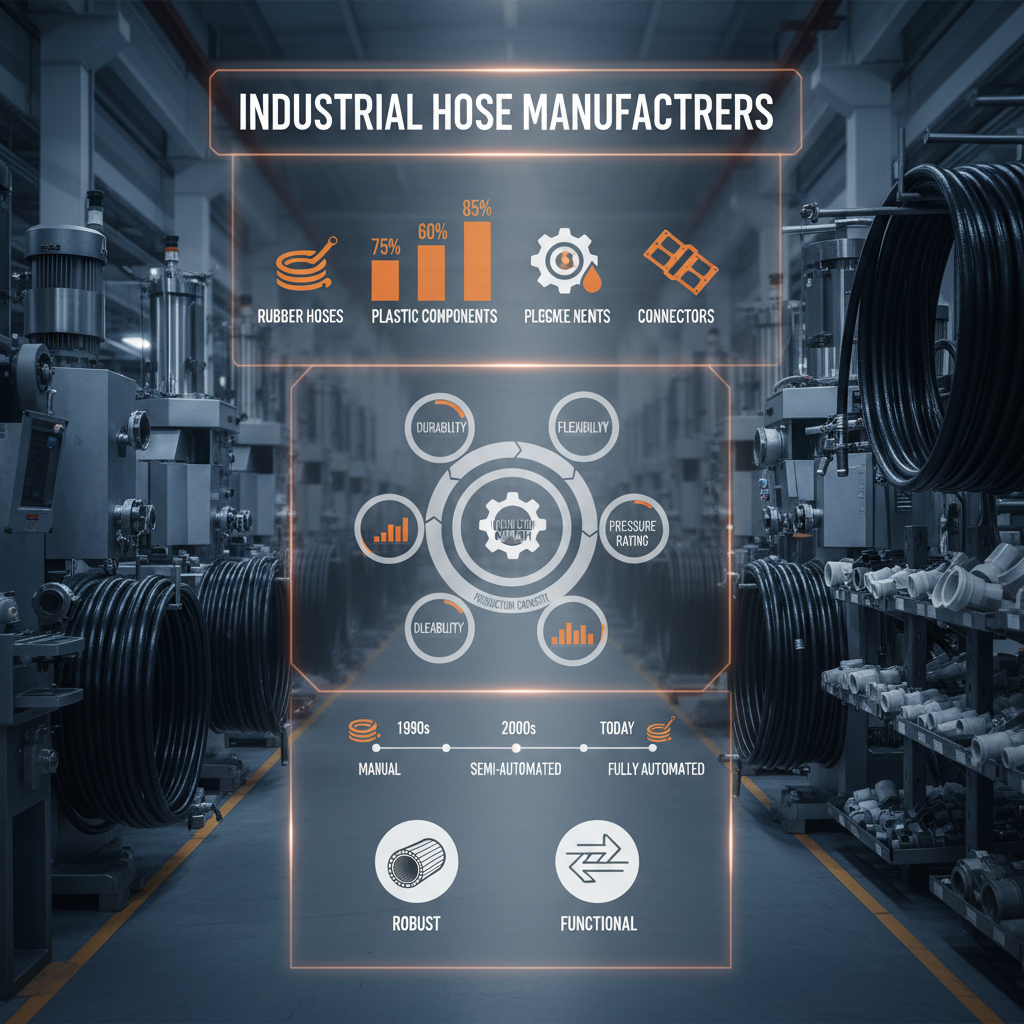
Manufacturer Evaluation Metrics for Industrial Hoses
Global Applications and Specialized Use Cases
The application of products from industrial hose manufacturers spans every conceivable industry. In the oil and gas sector, Steel Wire Spiral Hydraulic Hoses are used for suction and discharge in remote drilling sites where the hose must resist both internal pressure and external vacuum collapse. Similarly, in the automotive industry, Auto Rubber Hoses and Brake Hoses are engineered for extreme vibration and heat cycling.
In specialized environments, such as food processing plants, Food Grade Hoses are mandated to prevent contamination. These hoses are manufactured using FDA-approved materials that resist bacterial growth and can withstand high-temperature Steam-in-Place (SIP) cleaning cycles. From the depths of hydraulic mining to the sterile halls of a laboratory, the versatility of hose engineering ensures that fluids move safely and efficiently.
Long-term Value and Safety Advantages
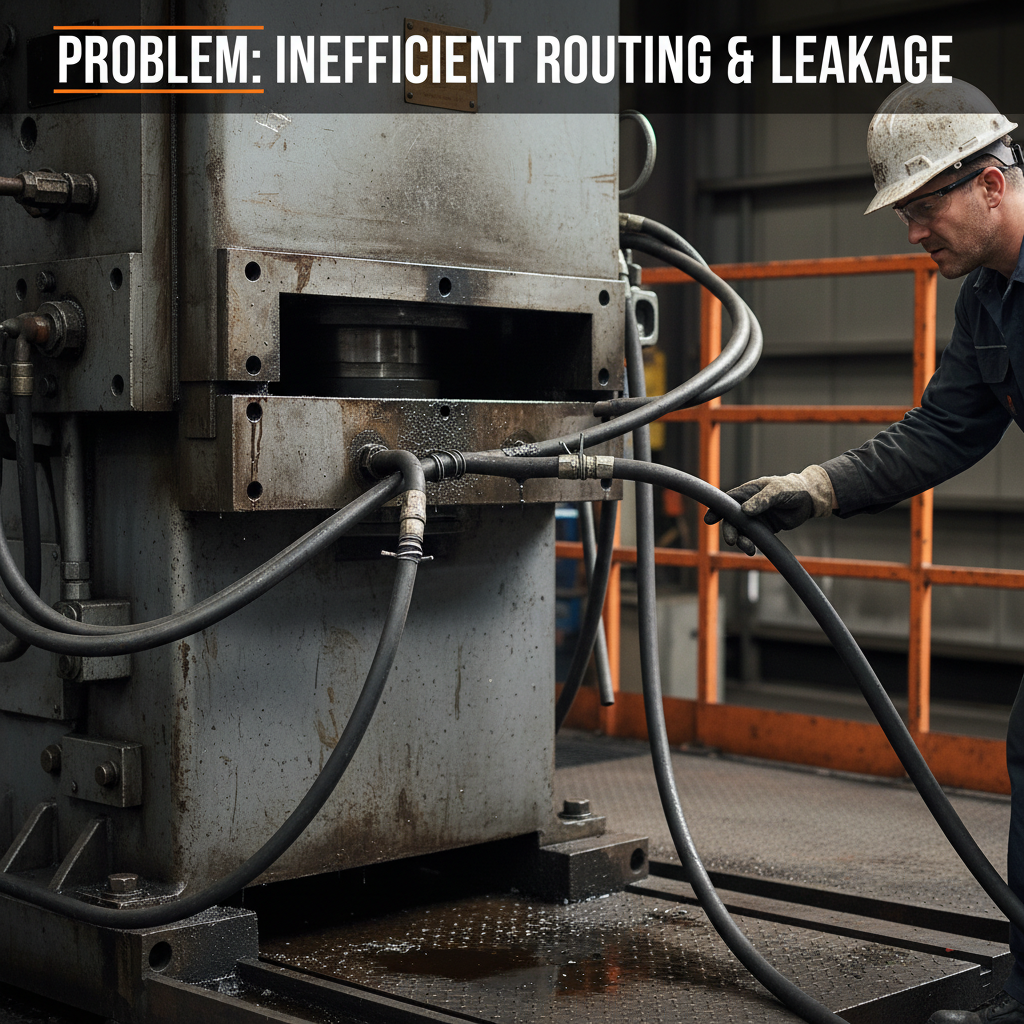
Investing in premium components from established industrial hose manufacturers provides a tangible return on investment (ROI) through the reduction of unplanned downtime. A low-cost hose that fails every six months is far more expensive than a high-quality hose that lasts five years, especially when considering the cost of labor and the risk of environmental spills.
Beyond the financial logic, there is the emotional and ethical angle of safety. In high-pressure hydraulic systems, a hose burst can lead to "hydraulic injection" injuries, which are severe and often permanent. By utilizing hoses with a high safety factor (usually 4:1), manufacturers provide peace of mind to operators, knowing that the equipment is designed to handle surges well beyond the normal working pressure.
Furthermore, sustainability is becoming a core value. Modern manufacturers are exploring recyclable thermoplastics and bio-based elastomers to reduce the carbon footprint of their products. This shift not only helps companies meet ESG (Environmental, Social, and Governance) targets but also ensures that the industry remains viable in a regulator-heavy future.
Future Innovations in Hose Technology
The future of industrial hose manufacturers is being shaped by the "Industry 4.0" revolution. We are seeing the emergence of "smart hoses" equipped with embedded sensors that can monitor pressure, temperature, and wall thickness in real-time. This transition from reactive maintenance to predictive maintenance allows operators to replace a hose before it fails, based on actual wear data rather than estimated timelines.
Material science is also advancing with the introduction of nano-composite reinforcements, which offer the strength of steel with a fraction of the weight. This is particularly critical for the aerospace and electric vehicle (EV) sectors, where weight reduction directly correlates to energy efficiency and range.
Automation in the assembly process is another key trend. The integration of AI-driven Hose Skiving Machines and robotic crimpers is reducing human error in the assembly phase, ensuring that every fitting is perfectly seated and every cut is square. This digital transformation ensures that quality is built into the process rather than just inspected at the end.
Comparative Analysis of Hose Material Innovations
| Material Type |
Durability Score (1-10) |
Chemical Resistance |
Typical Application |
| Nitrile Rubber (NBR) |
7 |
Excellent (Oil/Fuel) |
Oil Hose / Auto Rubber Hose |
| PTFE (Teflon) |
9 |
Universal (High Chem) |
Chemical Hose / Steam Hose |
| EPDM |
6 |
Good (Weather/Heat) |
A/C Hose / Water Transfer |
| Thermoplastic |
8 |
Moderate |
Thermoplastic Hose / Air |
| Silicone |
5 |
High (Food Grade) |
Food Grade Hose |
| Polyurethane |
8 |
High (Abrasion) |
Sandblasting Hose |
FAQS
You should look for the Working Pressure (WP) and the Burst Pressure. The working pressure is the maximum pressure the hose is designed for during continuous operation. Most reputable industrial hose manufacturers maintain a 4:1 safety factor, meaning the burst pressure is four times the working pressure. Always choose a hose with a working pressure slightly above your system's maximum spike to avoid fatigue.
Braided reinforcement (interwoven wires) is ideal for medium-to-high pressures and offers better flexibility, making it great for routing in tight spaces. Spiral reinforcement (wrapped layers of wire) is designed for extreme high-pressure applications and high-impulse environments. Spiral hoses are generally stiffer but are far more resistant to the "pulsing" effect found in heavy-duty hydraulic machinery.
Absolutely not. Chemical compatibility is the most critical factor in hose selection. Many chemicals will dissolve or degrade standard rubber, leading to leaks or explosions. You must consult the compatibility chart provided by your industrial hose manufacturers. For most aggressive chemicals, a PTFE liner with a stainless steel braid is the industry standard for safety and longevity.
While this depends on the environment, a monthly visual inspection is recommended. Look for "bubbling" on the cover, exposed reinforcement wires, or leaking at the crimped fittings. In high-risk environments, we suggest using a scheduled replacement program based on the manufacturer's estimated service life to prevent catastrophic failure before it happens.
Look for ISO 9001 for quality management systems. Depending on the application, you should also seek SAE (Society of Automotive Engineers) standards for hydraulic hoses, FDA compliance for food-grade hoses, and UL or FM approvals for fire-fighting or high-temperature steam hoses. Certifications ensure the manufacturer follows a rigorous, repeatable testing process.
PTFE hoses offer near-universal chemical resistance, can handle much higher temperatures, and have a lower coefficient of friction, which prevents fluid buildup. The stainless steel braiding provides the structural strength to handle high pressures while protecting the PTFE core from physical abrasion, making it the gold standard for pharmaceutical and chemical industries.
Conclusion
In summary, the role of industrial hose manufacturers extends far beyond the simple production of rubber tubes. It is a complex intersection of material science, mechanical engineering, and rigorous safety testing. By prioritizing material compatibility, reinforcement strength, and certified testing protocols, businesses can significantly reduce operational risks and enhance the lifespan of their machinery.
Looking forward, the integration of smart sensors and sustainable polymers will redefine the standards of fluid transfer. We encourage procurement managers to move toward a partnership model with their suppliers, focusing on total cost of ownership rather than initial unit price. For high-performance solutions and expert guidance in hose selection, visit our website: www.hydhoses.com.

 Call Us+86-158-0331-9351
 Emailcarrie@sinopulse.cn
 AddressHandan City, Hebei , China