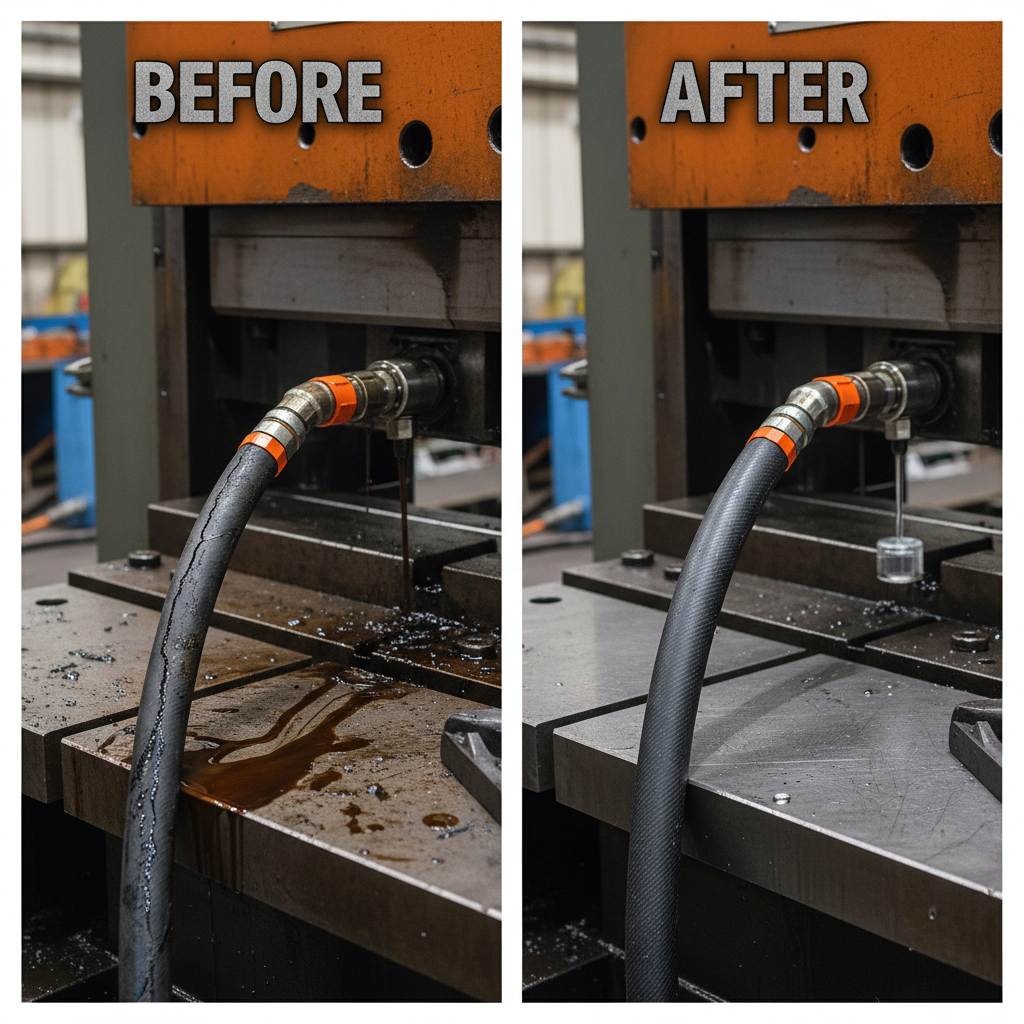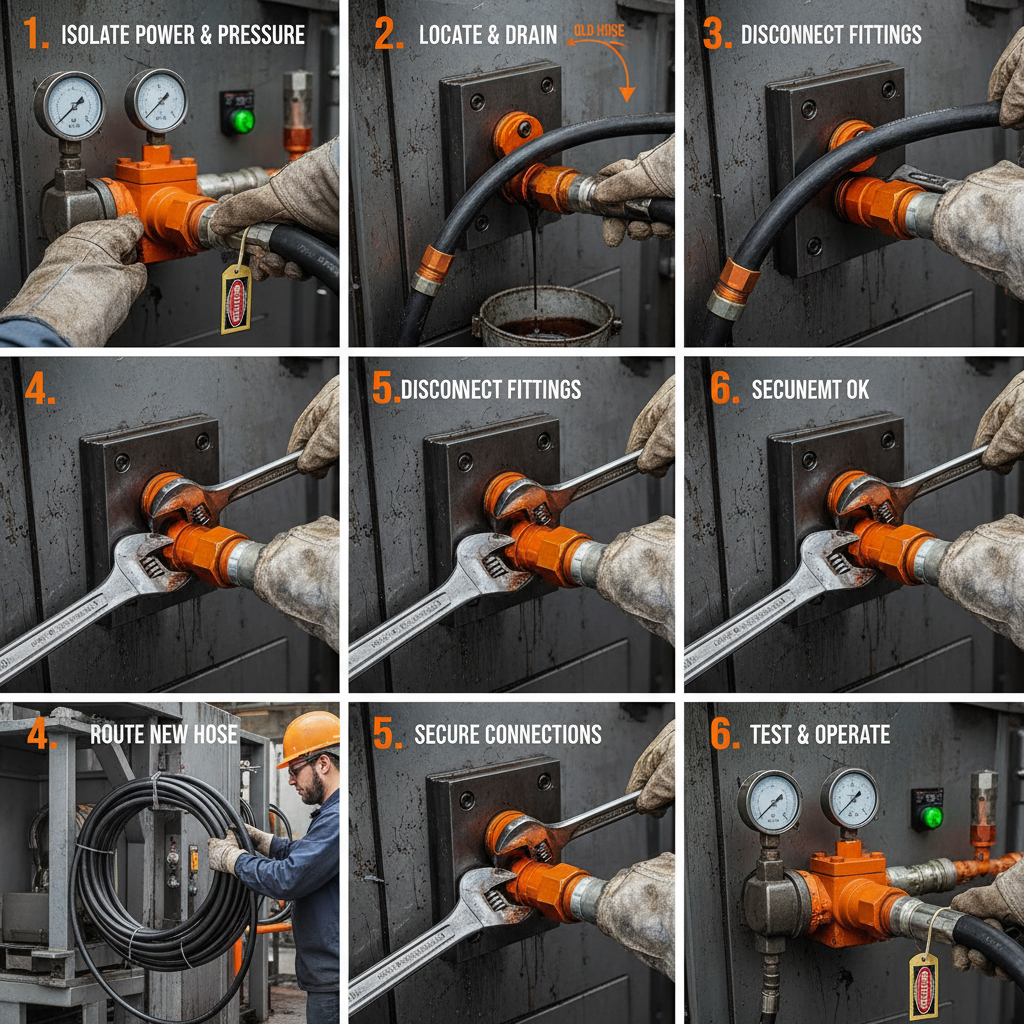


A hydraulic rubber hose factory specializes in the engineering and mass production of flexible conduits designed to transport high-pressure fluids in industrial systems. These facilities combine polymer chemistry with metallurgy to create reinforced hoses that can withstand extreme vacuum and pressure conditions, ensuring the stability of hydraulic pumps and actuators across various heavy-duty machinery.
In the demanding environment of modern manufacturing and construction, the failure of a single suction or return line can lead to catastrophic system collapse or expensive downtime. Many operators struggle with hose collapse under negative pressure or premature degradation due to oil incompatibility, making the selection of a factory that adheres to strict SAE and DIN standards critical for operational safety.
This comprehensive analysis explores the technical specifications of high-performance hoses, the critical role of spiral steel wire reinforcement, and a professional guide to selecting the right suction and return lines. Readers will gain the technical insights necessary to evaluate supplier capabilities and optimize their hydraulic system's lifespan and efficiency.

1Understanding Hydraulic Suction and Return Systems

Hydraulic suction and return lines serve as the circulatory system of any fluid power installation. While pressure lines push oil to actuators, suction lines are responsible for pulling fluid from the reservoir into the pump. This process often creates a vacuum, meaning the hose must resist atmospheric pressure to prevent internal collapse, which would starve the pump of oil and lead to cavitation.
A professional hydraulic rubber hose factory employs a multi-layer approach to address these opposite forces. By integrating synthetic rubber with specific reinforcement geometries, they ensure that the fluid flow remains laminar and unobstructed, even during sudden temperature shifts or high-vacuum cycles.
The distinction between a standard low-pressure hose and a dedicated suction hose lies primarily in the reinforcement. Standard hoses may use textile braids, but suction-rated hoses require rigid structures—typically spiral steel—to maintain their circular cross-section under negative pressure.
2Core Technical Features of Professional Rubber Hoses
The performance of a hydraulic hose is determined by its three-layer construction. The inner tube is formulated from oil-resistant synthetic rubber, designed to resist corrosion from petroleum-based fluids, water-glycols, and synthetic oils. This ensures that the hose does not swell or degrade internally, which could otherwise release particles into the hydraulic system.
The middle layer consists of a reinforced textile and spiral steel wire. This architecture allows the hose to be flexible enough for routing around machinery while remaining rigid enough to resist crushing. This balance is critical in mobile equipment where vibration and movement are constant factors.
Finally, the outer cover is engineered for environmental resilience. High-quality factories use rubber compounds that are UV-resistant, abrasion-resistant, and weather-resistant. Some specialized covers are also MSHA approved for flame resistance, making them suitable for underground mining and high-risk industrial zones.
3Critical Industrial Applications and Use Cases
In the realm of industrial machinery, hydraulic return lines are indispensable for large-scale equipment such as injection molding machines and hydraulic presses. These systems move vast quantities of oil that must be returned to the tank efficiently to maintain thermal stability and prevent overheating of the fluid.
Construction and engineering machinery, including excavators, loaders, and cranes, rely heavily on suction lines. These hoses often operate in harsh environments where they are exposed to debris and extreme weather. The ability of the hose to resist external abrasion while maintaining a vacuum seal is paramount for the longevity of the hydraulic pump.
Beyond heavy machinery, pump suction lines are utilized in general industry for transporting various liquid media. Whether it is petroleum-based hydraulic oil or water-based fluids, the hose must be chemically compatible with the media to avoid premature failure and system contamination.
4Analyzing Pressure and Vacuum Performance Metrics
Performance metrics for suction hoses are often counter-intuitive. For example, as the inner diameter (I.D.) of the hose increases, the maximum working pressure it can withstand generally decreases. This is because the larger surface area of the hose wall is more susceptible to the forces acting upon it, requiring precise calculations for safe operation.
Looking at the SAE 100R4 standard, a 3/4" I.D. hose can reach a working pressure of 2.1 MPa (305 PSI), whereas a 4" I.D. hose might only be rated for 58 PSI. This trend highlights the importance of matching the hose size precisely to the pump's requirements to avoid excessive pressure drops or hose failure.
hydraulic rubber hose factory Performance Metrics
Burst pressure is another critical safety metric. Professional grade hoses are often designed to withstand four times their working pressure. This safety factor ensures that momentary pressure spikes do not lead to an immediate rupture, providing a critical window for system shutdown and maintenance.
5Strategic Procurement and Selection Criteria
When procuring hoses from a hydraulic rubber hose factory, buyers must look beyond the price per meter. The total cost of ownership is determined by the hose's lifespan and the cost of unplanned downtime. Evaluating the factory's adherence to international standards such as SAE J517 and DIN is the first step in ensuring quality.
Compatibility is the second major factor. Procurement teams should specify the exact fluid being transported—whether it is mineral oil, glycol, or a synthetic blend—to ensure the inner tube material is appropriate. Using a hose with the wrong compound can lead to inner liner swelling, which restricts flow and increases pump wear.
Finally, consider the assembly. Finished assemblies with crimped fittings are often preferable to bulk hose and separate fittings. Custom lengths and precisely matched fittings reduce the risk of leaks at the connection points, which is where most hydraulic failures occur.
6Innovations in Polymer and Reinforcement Technology
The industry is moving toward more sustainable and high-performance polymers. Modern synthetic rubbers are being developed to operate in wider temperature ranges, typically from -40°C to +100°C, without losing flexibility or becoming brittle. This allows machinery to operate in extreme climates without frequent hose replacements.
Advancements in steel winding technology have also allowed for lighter yet stronger reinforcement layers. By optimizing the pitch and diameter of the spiral wire, factories can produce hoses that offer better bending radii while maintaining the same vacuum resistance, simplifying the installation process in tight engine compartments.
Digitalization in manufacturing, such as the use of CNC machinery for fitting production and automated testing benches, ensures that every batch of hoses meets a strict tolerance level. This reduces the variance between individual units and increases the reliability of mass-produced hydraulic components.
7Comparative Analysis of Hose Standard Specifications
Choosing between different SAE standards requires an understanding of the specific application. For instance, the SAE 100R3 is a low-pressure hose with textile reinforcement, making it unsuitable for suction lines where vacuum resistance is required. In contrast, the SAE 100R4 is specifically designed for these roles due to its spiral steel reinforcement.
The following table compares common hydraulic hose types to assist in technical selection. Note that while high-pressure hoses like R12 or R15 are essential for the main working lines, they are overkill and too rigid for suction and return applications.
| Hose Standard | Reinforcement | Primary Use | Vacuum Resistance |
|---|---|---|---|
| SAE 100R3 | Textile Braid | Low Pressure Return | Low |
| SAE 100R4 | Spiral Steel Wire | Suction & Return | High |
| SAE 100R1 | Single Steel Braid | Medium Pressure | Moderate |
| SAE 100R2 | Double Steel Braid | High Pressure | Moderate |
| SAE 100R12 | Four Spiral Steel | Extreme Pressure | Moderate |
| SAE 100R15 | Six Spiral Steel | Ultra-High Pressure | Moderate |
Ultimately, the selection depends on the balance between pressure requirements and flexibility. For suction lines, the spiral steel of the R4 standard remains the gold standard, ensuring that the pump receives a steady stream of oil without the risk of hose collapse.
Frequently Asked Questions
Conclusion
Selecting the right conduits from a professional hydraulic rubber hose factory is a critical decision that impacts the efficiency and safety of any hydraulic system. By understanding the technical necessity of spiral steel reinforcement for suction lines and adhering to international standards like SAE 100R4, operators can prevent system collapse and significantly reduce unplanned maintenance costs.
For procurement teams and engineers evaluating suitable solutions to optimize their fluid power systems, detailed technical specifications and available product ranges can be reviewed at www.hydhoses.com to ensure a perfect match for your operational requirements.