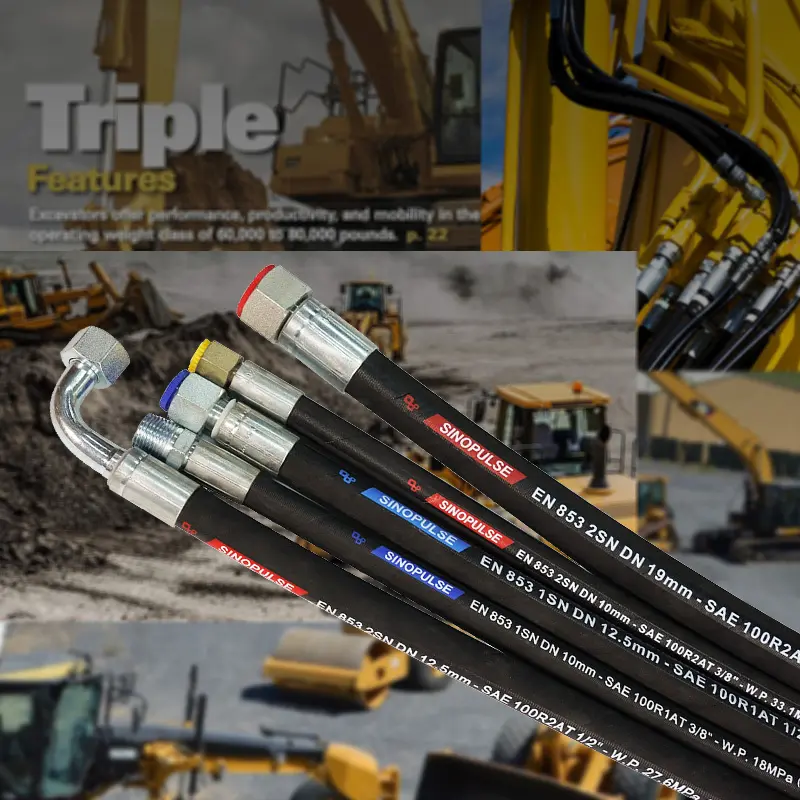


SAE100 R7 and R8 thermoplastic hydraulic hoses share a -40°C to +93°C temperature range, but their reinforcement, pressure ratings, dimensions, bend radii, and weights differ. R7 uses one braided synthetic-yarn layer, while R8 uses two. Compare the matching bore sizes and application conditions before selecting a hose for medium-pressure hydraulic service or non-conductive equipment.

SAE100 R7 Thermoplastic Hydraulic Hose
SAE100 R8 Thermoplastic Hydraulic Hose
SAE100 R7 and SAE100 R8 are both thermoplastic hydraulic hose options for petroleum-, water-, and synthetic-based hydraulic fluids at medium pressure. The practical choice depends on the pressure requirement, the space available for routing, and whether the system is a non-conductive application with possible high-voltage contact.
The construction difference
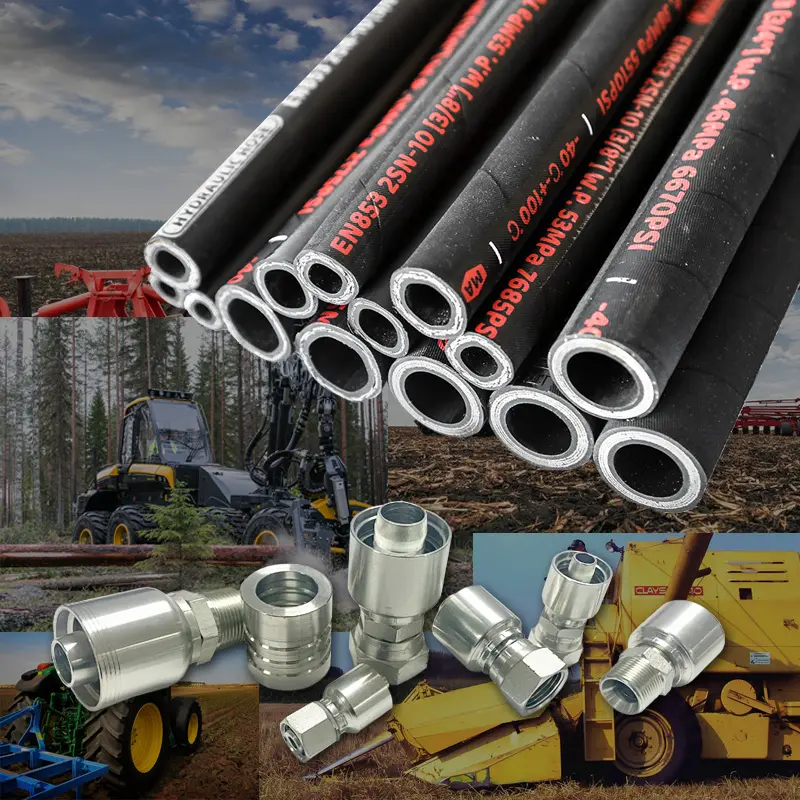
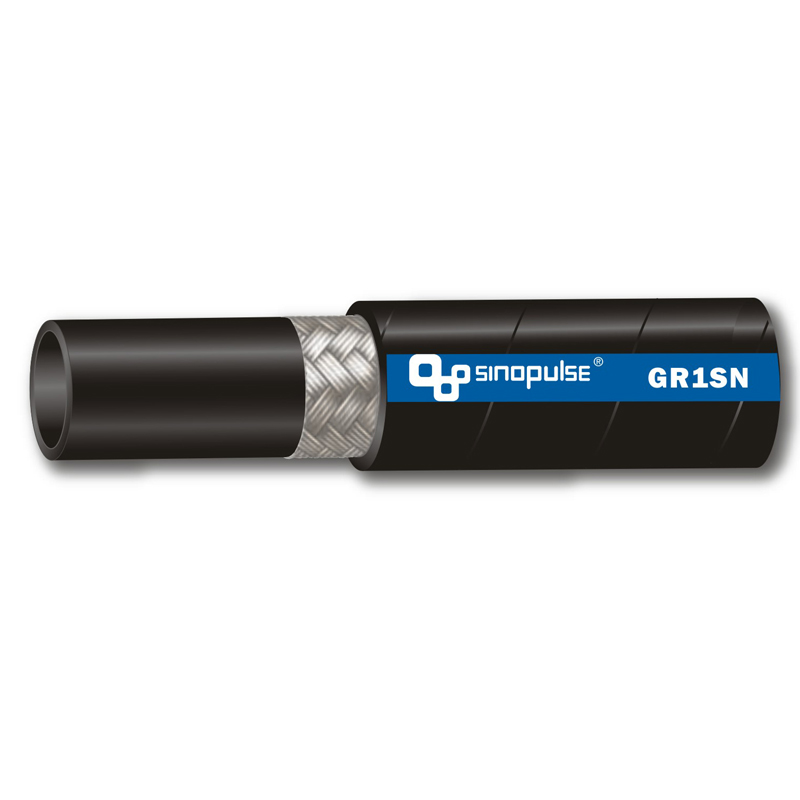
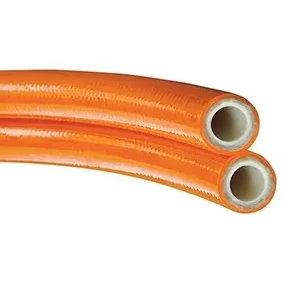
SAE100 R7 uses one braid of high-tensile synthetic yarn. SAE100 R8 uses two braids of high-tensile synthetic yarn. Both use a thermoplastic tube and a high-flexibility nylon or thermoplastic cover. Both cover constructions are flame resistant, and both product ranges are specified for -40°C to +93°C.
The extra reinforcement in R8 is reflected in its pressure figures and physical dimensions. At the 1/2-inch dash size, for example, R7 has a 20.7 mm outside diameter, a 13.8 MPa working pressure, and a 76 mm minimum bend radius. R8 at the same dash size has a 22.7 mm outside diameter, a 24.0 MPa working pressure, and a 102 mm minimum bend radius. Allow room for the larger outside diameter and bend radius when routing R8.
Pressure and connection dimensions
The two ranges use the same nominal inner diameters at each matching dash size, but their outside dimensions and pressure ratings differ. The table uses equivalent MPa values for direct comparison.
| Dash size | Nominal I.D. | R7 O.D. | R7 working pressure | R7 burst pressure | R7 bend radius | R7 weight | R8 O.D. | R8 working pressure | R8 burst pressure | R8 bend radius | R8 weight |
|---|---|---|---|---|---|---|---|---|---|---|---|
| -02 | 3.3 mm | 8.5 mm | 17.2 MPa | 69 MPa | 13 mm | 0.038 kg/m | 10.2 mm | 34.5 MPa | 138 MPa | 20 mm | 0.090 kg/m |
| -03 | 4.8 mm | 10.8 mm | 20.7 MPa | 83 MPa | 20 mm | 0.080 kg/m | 13.1 mm | 34.5 MPa | 138 MPa | 40 mm | 0.120 kg/m |
| -04 | 6.4 mm | 13.0 mm | 20.7 MPa | 83 MPa | 33 mm | 0.120 kg/m | 15.9 mm | 34.5 MPa | 138 MPa | 50 mm | 0.160 kg/m |
| -05 | 7.9 mm | 15.1 mm | 17.2 MPa | 69 MPa | 46 mm | 0.145 kg/m | 17.0 mm | 20.0 MPa | 120 MPa | 65 mm | 0.175 kg/m |
| -06 | 9.5 mm | 17.0 mm | 15.5 MPa | 62 MPa | 51 mm | 0.170 kg/m | 19.0 mm | 27.6 MPa | 110 MPa | 75 mm | 0.190 kg/m |
| -08 | 12.7 mm | 20.7 mm | 13.8 MPa | 55 MPa | 76 mm | 0.250 kg/m | 22.7 mm | 24.0 MPa | 95 MPa | 102 mm | 0.300 kg/m |
| -10 | 15.9 mm | 23.0 mm | 13.8 MPa | 55 MPa | 86 mm | 0.300 kg/m | 25.0 mm | 18.5 MPa | 74 MPa | 150 mm | 0.360 kg/m |
| -12 | 19.1 mm | 26.0 mm | 11.5 MPa | 45 MPa | 150 mm | 0.346 kg/m | 29.0 mm | 13.5 MPa | 54 MPa | 180 mm | 0.370 kg/m |
| -16 | 25.4 mm | 32.0 mm | 6.9 MPa | 28 MPa | 180 mm | 0.422 kg/m | 34.0 mm | 10.0 MPa | 40 MPa | 230 mm | 0.490 kg/m |
At every listed matching size, R8 has a larger outside diameter and a larger minimum bend radius than R7. R8 also has a higher working pressure and burst pressure at each size in this range. R7 has the lower listed weight at every matching size, which can matter when a system uses long hose runs or when routing space is tight.
Application fit
Choose R7 when the system falls within its pressure range and you need the smaller outside diameter, smaller bend radius, or lower weight at the selected bore size. Its application covers petroleum-, water-, and synthetic-based hydraulic fluids from -40°C to +93°C at medium pressure. The range is non-conductive because of its material selection.
Choose R8 when the pressure requirement calls for its higher listed rating or when the hose is intended for non-conductive service with possible contact with high-voltage sources. Its listed applications include blowout preventers, lube lines, and construction machinery. The larger R8 dimensions need to be included in clamp spacing, fitting access, and routing clearance.
Picture a compact hydraulic assembly with several parallel lines and limited clearance around a valve block. Matching the bore size, R7 leaves more room around neighboring lines because its outside diameter and bend radius are lower at each listed size. In a construction-machine circuit exposed to higher pressure demands, R8 provides the higher listed working-pressure values, but the routing plan must accept its larger envelope.
What to check before ordering
Start with the hose's nominal inner diameter and the system's required working pressure. Then check the minimum bend radius against the actual route, including movement at the equipment connection. For a 3/4-inch bore, R7 is 26.0 mm outside diameter with a 150 mm bend radius, while R8 is 29.0 mm outside diameter with a 180 mm bend radius. The difference affects clamps, guards, and nearby components.
Confirm the fluid family and temperature range for the service. Both products are listed for petroleum-, water-, and synthetic-based hydraulic fluids from -40°C to +93°C. For non-conductive service, identify whether the installation resembles the R8 applications of blowout preventers, lube lines, or construction machinery, or the non-conductive hydraulic service described for R7.
What cover colors are listed for the two hose ranges?
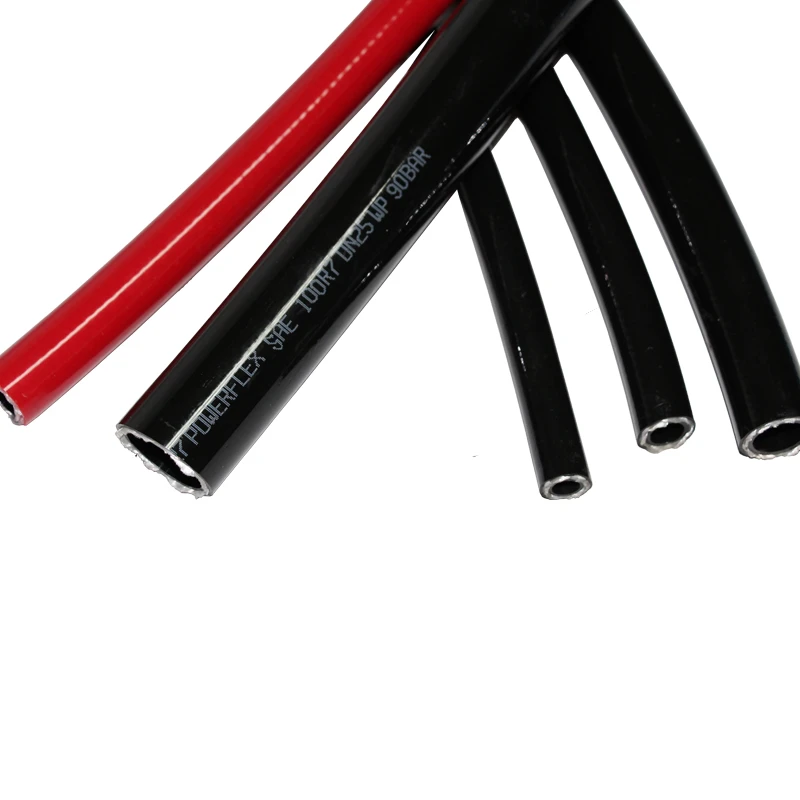
R7 lists red, black, blue, yellow, orange, and gray as alternative cover colors. R8 lists black, orange, yellow, blue, and red. This can help separate lines during assembly or match an existing installation, while the pressure, bore, and routing dimensions still determine the hose selection.
Can the R8 layline be customized?
Yes. R8 includes a customized layline option in its product details. A layline can help identify the hose during installation, inspection, or replacement work. Send the required marking information with the hose specification so the requested identification is considered alongside the dash size, pressure, fluid, temperature, length, and routing requirements.
What acceptance is listed for the hose covers?
Both R7 and R8 list MSHA acceptance for their high-flexibility nylon or thermoplastic covers. Their cover descriptions also identify flame-resistant properties. These details concern the listed cover construction, so the selected hose still needs to match the system pressure, fluid family, temperature range, bore, and routing conditions.
Make the selection from the route and pressure
R7 suits a medium-pressure hydraulic circuit where a smaller, lighter hose envelope is useful and its pressure values cover the service. R8 suits applications that need its higher listed pressure values or its stated non-conductive application range, with more routing clearance reserved. Send the required dash size, fluid, operating temperature, working pressure, hose length, and bend path for a quotation.

About the author
The company
HEBEI SINOPULSE TECH GROUP CO.,LTD.
Sinopulse is a renowned company that has been a leading industrial pipe, various hose fittings, and hydraulic hose manufacturer since its establishment in 2011. Founded by three brothers Cao, the company has grown from strength to strength, establishing itself as a key player in the industry.…
About Us ↗Visit company website ↗
Product Application