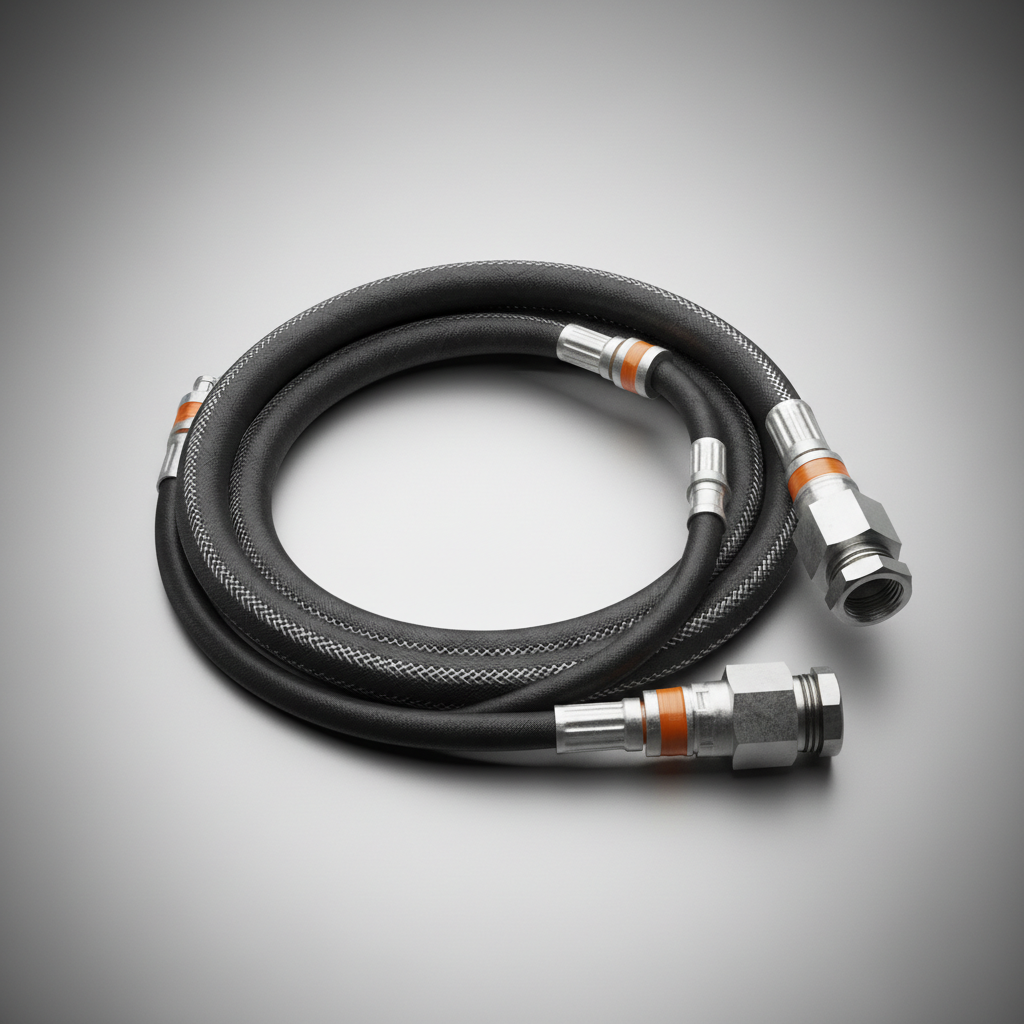


Selecting a reliable hydraulic hose company is often the difference between seamless industrial operation and catastrophic system failure. In high-pressure environments, the integrity of fluid conveyance depends not just on the raw materials, but on the precision of the braiding, the quality of the polyurethane covers, and the rigor of the testing benchmarks.
For procurement managers and engineers, the challenge lies in balancing burst pressure requirements with flexibility and chemical resistance. Whether managing a fleet of construction machinery or a chemical processing plant, the technical specifications of the hose—such as the transition from textile braiding to steel wire spirals—determine the long-term ROI of the hydraulic system.
This analysis examines the critical evaluation metrics for identifying a high-performance partner in the rubber and plastics manufacturing sector, focusing on how specialized construction and German-influenced engineering standards ensure consecutive quality supply across global industrial applications.

The Critical Role of Precision in Hose Manufacturing

Precision in the rubber and plastics industry is not a luxury; it is a safety requirement. A professional hydraulic hose company must integrate strict quality control from the initial tube extrusion to the final crimping process. When a hose fails, it is rarely due to a single factor but rather a combination of improper material pairing or inconsistent reinforcement tension.
The manufacturing process involves complex layering: the inner tube (often PA or rubber), the reinforcement (textile or steel), and the outer cover (PU or synthetic rubber). Discrepancies of even a fraction of a millimeter in the wall thickness can lead to uneven pressure distribution, significantly reducing the bursting pressure and increasing the risk of premature leakage.
Companies that adopt advanced manufacturing paradigms, such as integrating CNC machine tools for fittings and rigorous testing benches for every batch, provide a level of reliability that prevents unplanned downtime. This focus on "consecutive quality supply" ensures that the thousandth hose performs exactly like the first.
Technical Core: Material Science and Reinforcement Layers
The performance of a hydraulic hose is fundamentally governed by its construction. For instance, the R7N series utilizes a Polyamide (PA) tube reinforced with a textile braid and a non-conductive Polyurethane (PU) cover, specifically designed for environments where electrical isolation and flexibility are paramount.
Steel wire braiding and spiral reinforcement offer different mechanical advantages. Braided hoses provide superior flexibility and are ideal for medium-pressure applications, while spiral hoses are engineered for high-impulse environments, resisting the "ballooning" effect under extreme pressure spikes.
Temperature resilience is another critical metric. High-grade hoses must maintain structural integrity from -40°C up to +100°C. The use of specialized materials like PTFE in stainless steel braided hoses allows for extreme temperature ranges and superior chemical resistance, making them indispensable for corrosive fluid transfer.
Strategic Application Across Heavy Industry and Automotive
The versatility of modern hose technology allows for deep penetration into diverse sectors. In the automotive industry, Brake Hoses and A/C Hoses require extreme precision to handle rapid pressure changes and exposure to road salts and oils, necessitating high-grade rubber compounds and reinforced braiding.
In heavy construction and mining, Steel Wire Spiral Hydraulic Hoses are the gold standard. These systems often operate in abrasive environments where the outer cover must resist cutting and abrasion while the inner core manages pressures exceeding 400 bar. The ability to maintain a tight bend radius without kinking is a key operational requirement for hydraulic arms and excavators.
Beyond heavy machinery, Food Grade and Chemical Hoses must adhere to strict purity standards to prevent contamination. This requires specialized tube materials that do not leach chemicals into the medium and covers that can be easily sanitized without degrading the structural reinforcement.
Analyzing Performance Benchmarks in High-Pressure Systems
Evaluating a hydraulic hose company requires looking at the gap between theoretical burst pressure and actual operational endurance. A high-quality hose doesn't just meet the minimum SAE or EN standards; it provides a safety margin that accounts for impulse fatigue over thousands of cycles.
When comparing standard industrial hoses to those manufactured with advanced German-influenced technology, the difference is most visible in pressure retention and leak rates over time. The following data illustrates the relative performance improvements in durability and pressure stability.
hydraulic hose company Performance Metrics
As the chart indicates, the integration of precision machinery and high-grade materials significantly enhances the "Pressure Stability Index" and "Fatigue Life." This is achieved by optimizing the braiding angle of the reinforcement layer, which reduces the internal stress on the tube during pressure surges.
Procurement Strategies for Industrial Fluid Conveyance
Procuring hydraulic components is a risk management exercise. The lowest initial cost often leads to the highest total cost of ownership due to frequent replacements and system downtime. A strategic procurement approach focuses on the "matching" of the hose specification to the actual working conditions.
Buyers should evaluate the manufacturer's ability to provide complete solutions. This includes not only the hose but the compatible fittings and the machinery used for assembly, such as hose crimping and skiving machines. An integrated supply chain reduces the risk of assembly errors, which are a leading cause of fitting blow-offs.
Verification of certifications and adherence to international standards (like SAE 100 R1/R2 or EN 856) is essential. However, the most reliable suppliers provide transparent testing data from their own testing benches, allowing engineers to validate the performance against their specific operational loads.
Future Trends in Thermoplastic and PTFE Hybrid Hoses
The industry is shifting toward materials that offer a higher strength-to-weight ratio and absolute chemical inertness. Thermoplastic hoses are gaining traction in applications requiring high cleanliness and resistance to hydrolysis, reducing the reliance on traditional rubber compounds in sensitive environments.
PTFE (Polytetrafluoroethylene) combined with stainless steel braiding is likely to see increased adoption in the pharmaceutical and aerospace sectors. These hybrid solutions solve the trade-off between extreme temperature tolerance and the need for mechanical protection against external abrasion.
Furthermore, the digitalization of the manufacturing process—incorporating automated cutting and precision CNC joint production—is expected to further minimize human error. This transition toward "Smart Manufacturing" allows for better traceability of every hose batch, ensuring that safety-critical components can be tracked throughout their lifecycle.
Comparative Guide for Selecting Hose Reinforcement Types
Choosing the right reinforcement is a balance between flexibility, pressure capacity, and cost. Not all high-pressure environments are the same; a static line has different requirements than a hose that must move constantly within a robotic arm.
The following table provides a decision matrix based on common industrial requirements. By aligning the operating condition with the reinforcement technology, companies can optimize their system longevity and reduce maintenance intervals.
| Reinforcement Type | Primary Advantage | Best Use Case | Pressure Profile |
|---|---|---|---|
| Textile Braided | High Flexibility | Low-Medium Pressure Lines | Stable/Low Impulse |
| Steel Wire Braided | Balanced Performance | General Industrial Hydraulics | Medium-High Pressure |
| Steel Wire Spiral | Extreme Durability | Heavy Mining/Construction | High Impulse/Spikes |
| PTFE + SS Braid | Chemical Inertness | Corrosive Fluid Transfer | High Temp/Medium Press |
| Thermoplastic | Lightweight/Clean | Medical/Laboratory Gear | Consistent Flow/Low Press |
| Composite Hybrid | Multi-Stress Resistance | Offshore/Marine Systems | Variable High-Pressure |
For those evaluating their specific system needs, reviewing detailed specifications for different hose series can clarify which material combination is most appropriate. Professional guidance from a specialized manufacturer is recommended to ensure the selected bend radius and bursting pressure meet safety regulations.
Frequently Asked Questions
Conclusion
The selection of a hydraulic hose partner is a strategic decision that impacts the safety and efficiency of an entire industrial operation. By prioritizing technical precision, material compatibility, and a proven track record of consecutive quality supply, businesses can move from a reactive maintenance model to a proactive, high-reliability framework.
Whether the requirement is for high-pressure spiral hoses or specialized chemical-resistant PTFE lines, the focus must remain on the intersection of engineering standards and real-world application. Readers evaluating these options can review the relevant product and company information available through www.hydhoses.com to ensure their systems are optimized for peak performance.